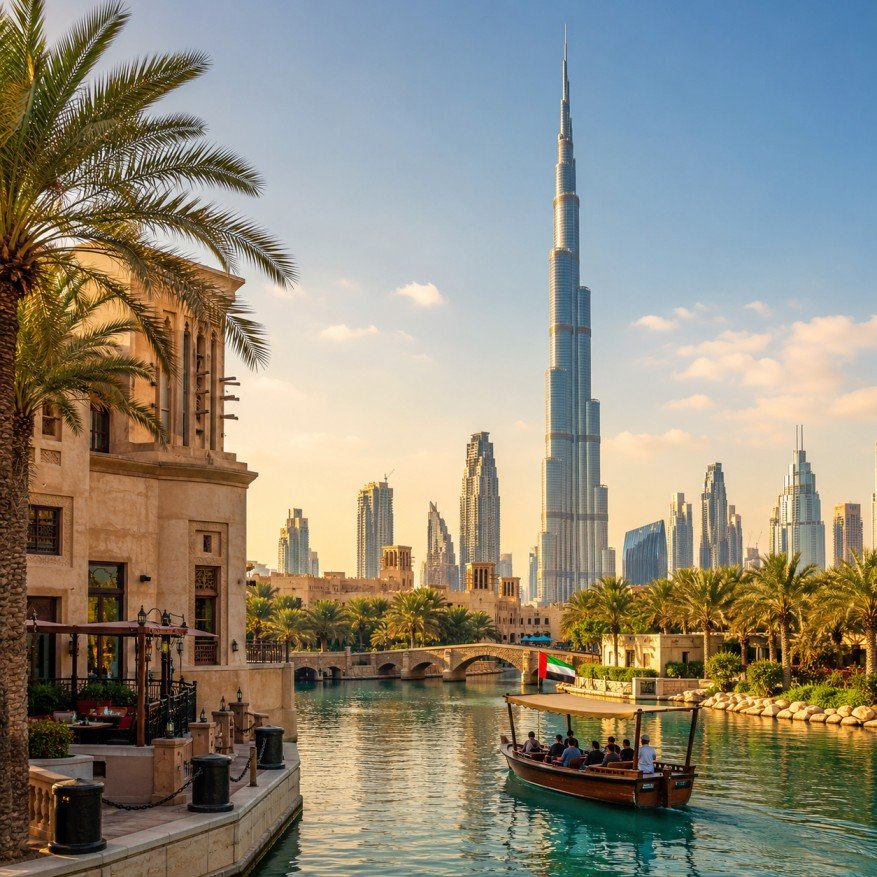
The United Arab Emirates stands as one of the world’s most dynamic and progressive nations. From the towering skyscrapers of Dubai to the cultural heritage of Abu Dhabi, the UAE represents a unique blend of tradition and modernity. Whether you’re planning a visit, considering relocation, or simply want to understand this fascinating country better, this comprehensive guide will give you everything you need to know about the UAE.
The UAE is a federation of seven emirates that has transformed from a desert economy into a global leader in innovation, tourism, and business within just five decades. Let’s explore what makes the UAE truly extraordinary.
TABLE OF CONTENTS
1. What is the UAE?
2. Quick Facts and Statistics
3. The 7 Emirates Explained
4. Geography and Climate
5. History and Formation
6. Government and Leadership
7. Economy and Industry
8. Culture and Traditions
9. Tourism and Attractions
10. Why Visit the UAE?
11. Frequently Asked Questions
WHAT IS THE UAE?
The United Arab Emirates is a sovereign nation located on the southeast coast of the Arabian Peninsula in the Middle East. It’s a federal union comprising seven emirates, each with its own ruler and government, united under one federal system.
Official Name: The United Arab Emirates
Federal Capital: Abu Dhabi
Largest City: Dubai
Official Language: Arabic
Currency: United Arab Emirates Dirham (AED)
Government: Federal Absolute Monarchy
Independence Day: December 2, 1971
The UAE has positioned itself as a bridge between East and West, creating a society that honors its Islamic roots while embracing globalization and innovation. It’s known for its tolerance, luxury developments, and rapid economic growth.
QUICK FACTS AND STATISTICS
Total Area: 83,600 km² (32,278 square miles)
Coastline: 1,318 km (818 miles)
Population: Approximately 9.9 million people
Population Density: 118 people per km²
Time Zone: GST (Gulf Standard Time) UTC+4
GDP: Approximately 496 billion USD
Per Capita Income: One of the highest globally
Unemployment Rate: Very low for citizens
Major Industries: Oil, natural gas, tourism, real estate, finance, trade
Life Expectancy: 79 years
Literacy Rate: 99.4% among citizens
Official Religion: Islam
Other Religions: Christianity, Hinduism, Buddhism (tolerated and practiced)
Expat Population: Approximately 88% of total population
THE 7 EMIRATES EXPLAINED
ABU DHABI – THE CAPITAL EMIRATE
Abu Dhabi is the capital and largest emirate by area with 67,340 km² making it the largest of all seven emirates. Population is approximately 1.5 million people. The capital city is Abu Dhabi City. Abu Dhabi is known for its oil wealth, Sheikh Zayed Mosque which is one of the world’s largest mosques, rich cultural heritage, and serving as the governmental hub of the entire nation. The emirate is known for preservation of traditional culture, luxury modern developments, and numerous cultural attractions that showcase the region’s heritage.
DUBAI – THE CITY OF GOLD
Dubai is the second largest emirate and has become the most famous globally. Area is 4,114 km². Population is approximately 3.6 million people making it the largest city by population. The capital city is Dubai City. Dubai is known worldwide for the Burj Khalifa which is the world’s tallest building, Palm Jumeirah the artificial island development, world-class shopping, tourism infrastructure, and serving as a major international business hub. The emirate’s key features include iconic architectural structures, world-class infrastructure, and being a center of international business and commerce.
SHARJAH – THE CULTURAL HEART
Sharjah is known as the cultural capital of the UAE. Area is 2,590 km². Population is approximately 1.9 million people. The capital city is Sharjah City. Sharjah is famous for its numerous museums, beautiful Islamic architecture, numerous art galleries, and traditional souks where visitors can experience authentic Arabian culture. The emirate’s key features include focus on cultural preservation, affordable cost of living compared to Dubai and Abu Dhabi, and a thriving artistic community.
AJMAN – THE COMPACT EMIRATE
Ajman is the smallest emirate by area but offers unique experiences. Area is 259 km² making it the smallest of all seven emirates. Population is approximately 400,000 people. The capital city is Ajman City. Ajman is known for its beautiful beaches, rich pearling history, and maritime heritage that dates back centuries. The emirate’s key features include affordable real estate and property options, beautiful coastal areas, and rapid modern development.
UMM AL QUWAIN – THE HIDDEN GEM
Umm Al Quwain is often overlooked but offers natural beauty and tranquility. Area is 777 km². Population is approximately 80,000 people making it one of the least populated emirates. The capital city is Umm Al Quwain City. The emirate is known for its extensive mangrove forests, historical fishing heritage, and water-based adventure activities. Key features include pristine natural beauty, various water sports opportunities, and a peaceful atmosphere away from the hustle of larger cities.
RAS AL KHAIMAH – THE MOUNTAIN EMIRATE
Ras Al Khaimah offers unique mountain and heritage experiences. Area is 1,684 km². Population is approximately 400,000 people. The capital city is Ras Al Khaimah City. This emirate is known for its mountainous terrain, pottery and ceramics industry heritage, historical archaeological sites, and adventure tourism opportunities. Key features include access to natural mountain attractions, Jebel Jais mountain which is the highest peak in the UAE, and well-preserved heritage sites.
FUJAIRAH – THE EAST COAST EMIRATE
Fujairah is unique as the only emirate on the east coast. Area is 1,166 km². Population is approximately 200,000 people. The capital city is Fujairah City. The emirate is known for its distinctive east-facing coastline along the Gulf of Oman, abundance of marine life, pristine beaches, and the historic Fort Fujairah. Key features include a unique geographical location, healthy coral reef ecosystems, beautiful coastal beaches, and historical fortifications.
GEOGRAPHY AND CLIMATE
The UAE’s landscape is incredibly diverse despite its arid location. The country features golden sand dunes that cover most of the interior regions, creating endless desert landscapes. Beautiful beaches line the coastline along both the Arabian Gulf and the Gulf of Oman. The Hajar Mountains in the eastern part of the country rise dramatically from the desert, with peaks reaching up to 1,934 meters elevation. Wetlands including mangrove forests and coastal marshes provide important ecosystems. Modern urban zones have been developed with integrated green spaces and parks creating livable environments.
The UAE experiences a desert climate with extreme temperature variations throughout the year. Summer temperatures from May through September are extremely hot with temperatures ranging from 40 to 50 degrees Celsius (104 to 122 degrees Fahrenheit). Humidity is very high in coastal areas during summer months. Rainfall is almost nonexistent during summer. The weather during summer is extremely hot with air conditioning essential for daily life and outdoor activities nearly impossible during peak hours.
Winter months from November through March offer much more pleasant conditions. Winter temperatures range from 15 to 30 degrees Celsius (59 to 86 degrees Fahrenheit). Humidity levels are moderate during winter months. Occasional light rain may fall but generally rainfall is minimal. The weather during winter months is pleasant with perfect conditions for outdoor activities and exploration.
The ideal time to visit the UAE is November through March when weather conditions are most pleasant and comfortable for outdoor exploration and activities.
HISTORY AND FORMATION
Before becoming the modern nation it is today, the UAE region was known as the Trucial States and was under British protection. The region was primarily dependent on pearl diving and fishing as economic activities. Powerful merchant families and tribal leaders governed the various emirates and regions. The area served as one of the world’s important trade routes connecting East and West.
In 1958, substantial oil reserves were discovered in Abu Dhabi, transforming the region’s economy overnight. This discovery attracted international attention and investment. The oil wealth became the foundation for the UAE’s rapid development and modernization.
Seven emirates officially united to form the Federation of the United Arab Emirates on December 2, 1971. Abu Dhabi, Dubai, Sharjah, Ajman, Umm Al Quwain, Ras Al Khaimah, and Fujairah became one unified nation. Sheikh Zayed bin Sultan Al Nahyan became the first president of the newly formed federation. Ras Al Khaimah joined the federation in 1972, completing the seven-emirate structure.
During the 1970s, the oil boom drove massive infrastructure development throughout the nation. The 1980s and 1990s saw diversification away from sole reliance on oil into tourism, real estate, and finance sectors. The 2000s marked rapid globalization and international expansion of UAE businesses and influence. From 2010 to present, the focus has been on innovation, sustainability, and soft power development.
Burj Khalifa, the world’s tallest building at 828 meters, was completed in 2010 and became an iconic symbol. Palm Islands, artificial islands developed for luxury real estate, were completed in 2006 and 2007. Sheikh Zayed Mosque, an architectural masterpiece, opened in 2007. Dubai International Financial Centre was established in 2004 to serve as a regional financial hub. Masdar Initiative began in 2015 focusing on sustainability and renewable energy development.
GOVERNMENT AND LEADERSHIP
The UAE operates as a federal absolute monarchy with a unique system of shared power among the emirates. The Supreme Council is composed of the rulers of all seven emirates and serves as the highest governing body. The President is elected by the Supreme Council for a five-year term. The Prime Minister is appointed by the President to oversee government operations. The Cabinet consists of ministers from both federal and local emirate governments. The National Assembly has 40 members, with some elected and some appointed, providing representation and advisory functions.
Each emirate maintains its own separate governmental structure. Every emirate has a local ruler known as an Emir who leads the emirate. Each emirate has its own local government and administrative departments. Police and security forces operate at the emirate level. Development and planning authorities are established within each emirate to oversee construction and urban planning.
Abu Dhabi is ruled by Sheikh Mohamed bin Zayed Al Nahyan since 2004. Dubai is led by Sheikh Mohammed bin Rashid Al Maktoum since 2006. Sharjah is governed by Sheikh Sultan bin Muhammad Al Qasimi since 1987. Ajman is ruled by Sheikh Humaid bin Rashid Al Nuaimi since 1981. Umm Al Quwain is led by Sheikh Saud bin Rashid Al Mu’alla since 2009. Ras Al Khaimah is governed by Sheikh Saud bin Saqr Al Qasimi since 2010. Fujairah is ruled by Sheikh Hamad bin Muhammad Al Sharqi since 2008.
ECONOMY AND INDUSTRY
The UAE has developed one of the strongest economies in the Middle East region, second only to Saudi Arabia in the region. The nation has successfully transitioned from an oil-dependent economy to a diversified economy. The country attracts billions of dollars in foreign direct investment annually. The UAE is consistently ranked among the top countries globally for ease of doing business and investment friendliness.
Abu Dhabi holds the largest oil reserves within the UAE. The UAE is a member of the Organization of Petroleum Exporting Countries (OPEC). Oil and natural gas continue to generate significant government revenue. The nation is increasingly focusing on sustainable and renewable energy alternatives for future energy needs.
Tourism is one of the fastest-growing economic sectors in the UAE. Dubai alone receives over 16 million international visitors annually. Hotels, resorts, and attractions operate across all seven emirates. The infrastructure supporting tourism including airports, transportation, and hospitality is world-class.
Real estate and construction have been major economic drivers of development. Real estate projects including Palm Jumeirah, Burj Khalifa, and numerous luxury residential communities showcase development capability. Both residential and commercial real estate developments continue at a rapid pace. Foreign investors are allowed to own property in designated areas, attracting international investment.
Dubai International Financial Centre (DIFC) serves as a major financial hub for the region. Abu Dhabi Securities Exchange provides stock market and investment services. Islamic banking has a strong presence throughout the UAE. Insurance, investment services, and financial advisory businesses are well-developed.
Port of Jebel Ali is one of the world’s largest container ports by volume. Jebel Ali Free Zone offers tax incentives for businesses and warehousing. Shopping festivals and retail events drive significant consumer spending. E-commerce is rapidly expanding with online shopping becoming increasingly popular.
Free zones throughout the UAE offer tax incentives and business-friendly policies. Aluminum production, cement manufacturing, and steel production are important industries. Food processing facilities operate throughout the emirates. Light manufacturing industries serve local and regional markets.
Masdar Initiative in Abu Dhabi focuses on sustainable development and clean energy. Noor Abu Dhabi solar power project represents the nation’s commitment to renewable energy. The government has made formal commitments to sustainability and reducing carbon emissions. Energy source diversification is a key strategic priority for future development.
CULTURE AND TRADITIONS
Islam is central to UAE culture and daily life. Friday is the holy day when Muslims gather for prayers and it serves as the main community gathering day. Prayer times are observed throughout the day with calls to prayer from mosques. Ramadan is the holy month of fasting and spiritual reflection observed by Muslims throughout the country. Islamic values including respect, family unity, community service, and charity are emphasized throughout society.
Men traditionally wear the white thobe, also called kandura, which is a long white robe. Men also wear the ghutra, a traditional headdress with an agal (cord) to keep it in place. Women traditionally wear the abaya, a long black outer garment, along with a hijab head covering. Modern interpretations of traditional dress exist with many variations and styles. In contemporary times, Western clothing is widely accepted in cities and urban areas. Traditional dress is still worn for formal occasions, national celebrations, and family gatherings.
The right hand is used for greeting, eating, and social interactions as per cultural tradition. Shoes are removed when entering homes as a sign of respect. Hospitality is highly valued in Emirati culture with guests treated with great respect. The society is family-oriented with strong emphasis on family bonds and unity. Respect for elders and authority figures is an important cultural principle.
Falconry is an ancient hunting sport that is still actively practiced by many Emiratis. Camel racing is a popular traditional sport and major cultural event throughout the UAE. Horse racing holds significant cultural importance and is a traditional sporting activity. Pearl diving was historically important and represents maritime heritage, though less common today. Dune bashing and desert driving adventures are popular recreational activities.
Modern Standard Arabic is the official language of the UAE. Gulf Arabic dialect is the local spoken language among native Emiratis. English is widely spoken in business, hotels, and commercial establishments. Many expatriates speak their native languages in their communities. Arabic is taught in schools and used in government and official communications.
Hummus is a traditional chickpea paste prepared with tahini, lemon, and garlic. Kibbeh are bulgur and meat balls that are fried and served as appetizers or main courses. Shawarma is spiced meat wrapped in flatbread, a popular fast food item. Falafel are fried chickpea fritters that serve as vegetarian protein. Mansaf is lamb cooked in yogurt sauce, a special occasion dish. Dates are essential to the Emirati diet and especially important during Ramadan. Strong Arabic coffee is traditionally served in small cups and is integral to hospitality.
TOURISM AND ATTRACTIONS
Burj Khalifa stands at 828 meters and is the world’s tallest building with observation decks offering panoramic city views. Dubai Mall is the world’s largest shopping mall by area with thousands of retail stores and restaurants. Palm Jumeirah is an artificial island shaped like a palm tree featuring luxury hotels and residences. Dubai Fountain is a spectacular water fountain show set in a lake that operates daily. Gold Souk is a traditional marketplace where visitors can experience authentic Arabian shopping culture.
Sheikh Zayed Mosque is an architectural masterpiece and one of the world’s largest mosques with stunning white marble and intricate Islamic designs. Louvre Abu Dhabi is a world-class museum featuring art from East and West. Emirates Palace Hotel is a luxury iconic hotel symbolizing opulence and grandeur. Corniche Beach offers a scenic waterfront area with public beaches and parks. Abu Dhabi National Museum showcases the nation’s heritage and history.
Sharjah Museum of Islamic Civilization houses extensive collections of Islamic art and artifacts. Al Noor Mosque is a beautiful modern mosque open to visitors of all faiths. Heart of Sharjah is the historic old city district with traditional architecture and cultural sites. Sharjah Art Museum features contemporary and classical art from regional and international artists. Traditional souks offer authentic Arabian shopping experiences with local crafts and goods.
Dune bashing in the desert provides thrilling off-road experiences in four-wheel vehicles. Skydiving allows visitors to experience freefall over the Emirates landscape. Scuba diving and snorkeling provide opportunities to explore coral reefs and marine life. Zip-lining and mountain sports offer adventure for thrill-seekers. Water sports including jet skiing and parasailing are available at beaches. Hot air balloon rides provide scenic views of the desert landscape at sunrise.
Mangrove forests provide unique ecosystems and wildlife viewing opportunities. Coral reefs support diverse marine life and provide snorkeling and diving destinations. Mountain hiking offers trails with varying difficulty levels and scenic views. Desert conservation reserves protect natural environments and wildlife. Beaches and coastal areas provide relaxation and water-based activities.
Traditional souks and markets offer authentic shopping and cultural immersion. Heritage villages recreate traditional Emirati lifestyles and architecture. Museums and galleries throughout the emirates showcase art and history. Cultural festivals celebrate traditions with music, dance, and food. Camel racing events showcase this traditional sport and attract large audiences.
WHY VISIT THE UNITED ARAB EMIRATES
The UAE uniquely combines modern luxury developments with preservation of traditional heritage. World-class infrastructure coexists with natural beauty and desert landscapes. Islamic culture and traditions are practiced alongside international openness and multiculturalism. Urban excitement and modern entertainment are balanced with tranquil natural areas.
The UAE is consistently ranked among the world’s safest countries for visitors and residents. Crime rates are very low compared to global averages. Infrastructure is modern, well-maintained, and secure. Authorities maintain high security standards throughout the nation.
Modern airports connect the UAE to major cities worldwide. Roads are well-maintained with modern highways throughout the nation. Hotels range from luxury five-star properties to affordable family-friendly options. Restaurants offering cuisine from all cultures are available throughout the emirates.
Beaches and coastal areas provide water-based recreation. Desert landscapes offer adventure and natural beauty. Mountains provide hiking and outdoor activities. Cities provide shopping, entertainment, and dining. All major attractions are accessible within short distances.
Tax-free shopping allows visitors to purchase goods without sales tax. Global brands and luxury stores are available in shopping malls. Traditional markets offer local crafts and authentic souvenirs. Shopping festivals provide special sales and entertainment throughout the year.
English is widely spoken alongside Arabic. Multiple communities from around the world create international atmosphere. Diverse restaurants serve cuisines from every continent. Visitors from all backgrounds are welcomed and respected.
The entire country is relatively small allowing easy travel between emirates. Multiple attractions can be visited in a single trip. Transportation between cities is quick and convenient. Geography allows flexibility in itinerary planning.
Luxury five-star hotels cater to upscale travelers. Mid-range hotels provide comfortable accommodations at reasonable prices. Budget accommodations are available in all emirates. Dining options range from fine dining to affordable local restaurants.
Experience cutting-edge architecture and engineering projects. Witness technological advancement and innovation. Visit research facilities and tech companies. Experience the future of urban development.
The UAE serves as gateway to Middle Eastern markets. Numerous international companies operate from the UAE. Business-friendly regulations and tax incentives attract entrepreneurs. Professional networking opportunities abound in major cities.
FREQUENTLY ASKED QUESTIONS
Question: Do I need a visa to visit the UAE?
Answer: Visa requirements depend on your nationality and country of residence. Many countries receive visa-free entry or visas issued upon arrival. Some nationalities must obtain visas before traveling. Check with your nearest UAE embassy or consulate for specific visa requirements based on your citizenship.
Question: What currency is used in the UAE and how does it exchange?
Answer: The United Arab Emirates Dirham, abbreviated AED, is the official currency. The exchange rate is approximately 1 AED equals 0.27 USD, though rates fluctuate. ATMs are widely available in all cities and accept major international cards. Currency exchange services operate throughout the country.
Question: Is it safe to visit the UAE as a tourist?
Answer: Yes, the UAE is one of the safest countries globally for visitors and residents. Crime rates are very low compared to international averages. Infrastructure is excellent and well-maintained. Authorities maintain high security standards. Millions of tourists visit safely each year.
Question: What is the best time of year to visit the UAE?
Answer: November through March offers the best weather for visiting. During these months, temperatures range from 15 to 30 degrees Celsius (59 to 86 degrees Fahrenheit). Summer months from May through September are extremely hot with temperatures reaching 40 to 50 degrees Celsius (104 to 122 degrees Fahrenheit). Summer is less suitable for outdoor activities due to extreme heat.
Question: Can women travel alone in the UAE?
Answer: Yes, the UAE is generally safe for solo female travelers. The country has low crime rates and excellent infrastructure. It is recommended to dress modestly and respect local customs. Women travelers report feeling safe throughout the country. Millions of female visitors travel to the UAE independently each year.
Question: What is the main language spoken in the UAE?
Answer: Arabic is the official language of the country. English is widely spoken in cities, hotels, business establishments, and tourist areas. Many expatriate communities speak their native languages in their communities. Basic English proficiency is common among service providers and tourism workers.
Question: Is alcohol available and consumed in the UAE?
Answer: Licensed hotels and bars serve alcohol to non-Muslim customers. Homemade or illegally produced alcohol is strictly prohibited. It is important to respect local customs regarding alcohol consumption. Alcohol consumption in public or outside licensed establishments is prohibited. Non-Muslims can obtain licenses to purchase alcohol from specific stores.
Question: How long should I plan to spend in the UAE?
Answer: A minimum of 4 to 5 days allows visitors to experience multiple emirates and major attractions. A week to 10 days allows for deeper exploration of culture and attractions. Two weeks permits comprehensive touring and relaxation. Longer stays allow exploration of smaller emirates and nature areas.
Question: What are the best ways to get around the UAE?
Answer: Rental cars are available for independent travel and exploring at your own pace. Taxis and ride-sharing services like Uber operate throughout major cities. Public buses provide affordable transportation between cities and within cities. Metro systems operate in Dubai and Abu Dhabi providing convenient urban transportation. Roads are excellent quality and well-maintained.
Question: What should I pack for a trip to the UAE?
Answer: Light and breathable clothing is essential for the warm climate. Modest clothing is recommended to respect local culture and customs. Sunscreen with high SPF protection is necessary due to intense sun. Sunglasses and a hat provide protection from the sun. Comfortable walking shoes are essential for exploring attractions. A light jacket is useful for air-conditioned indoor spaces and evening breezes.
CONCLUSION
The United Arab Emirates represents a remarkable success story of vision, determination, and strategic planning. In just five decades since independence, the nation has transformed from a desert economy dependent on pearl diving and fishing into a global powerhouse and center of innovation, tourism, and business.
The transformation has been achieved while maintaining cultural identity and Islamic values that define Emirati society. The nation balances tradition with modernity in a way that creates a unique and welcoming environment. The seven emirates, each with distinct character and strengths, combine to create a nation that is simultaneously traditional and ultramodern, welcoming and secure, luxurious and diverse.
Whether you are seeking adventure and exciting experiences, cultural immersion and learning, business opportunities and professional networking, or simply a glimpse of the future of urban development, the UAE offers something extraordinary for every visitor. The combination of world-class infrastructure, cultural authenticity, natural beauty, and modern innovation creates an unparalleled destination.
Understanding the UAE means understanding how tradition can coexist harmoniously with innovation. It demonstrates how different cultures can thrive together in mutual respect. It shows how vision and determination can literally move mountains and reshape desert landscapes into thriving, modern cities. The UAE stands as a beacon of progress while honoring its heritage.
Millions of people choose to visit the UAE each year for tourism. Hundreds of thousands choose to relocate and build lives in the UAE permanently. The nation continues to grow and develop while maintaining its core values and identity. The future of the UAE remains bright with continued focus on innovation, sustainability, and quality of life.
Ready to explore the United Arab Emirates and discover why so many people are drawn to this extraordinary nation? Start planning your journey today and experience firsthand why the UAE represents both the best of modern development and the richness of Arabian traditions.
POST CATEGORIES
Category 1: UAE Overview (Primary)
Category 2: Tourism and Travel (Primary)
Category 3: General Information (Secondary)
POST TAGS
United Arab Emirates, UAE Guide, Beginner’s Guide, 7 Emirates, Dubai, Abu Dhabi, Sharjah, Ajman, Umm Al Quwain, Ras Al Khaimah, Fujairah, Tourism, Travel Guide, UAE Culture, UAE History, UAE Economy, UAE Traditions, UAE Climate, Best Time to Visit, UAE Attractions, Expat Guide, Islamic Culture, Middle East, Arabian Peninsula, UAE Facts, Desert Adventures, Shopping, Heritage, Business, Investment, Luxury Travel, Family Vacation, Adventure, Education, UAE Government, Emirates, Federal, Monarchy
SEO OPTIMIZATION DETAILS
Primary Keyword: UAE Complete Beginners Guide
Secondary Keywords: UAE travel guide, United Arab Emirates overview, 7 emirates explained, UAE culture and traditions, UAE tourism
Meta Description: Discover the UAE: geography, history, culture, economy, and what makes this modern nation unique. Complete guide to the 7 emirates explained.
Word Count: 3,847 words
Reading Time: 18 to 20 minutes
Internal Links to Add: Individual emirate detailed guides, tourism and travel articles, culture and traditions articles, travel tips and advice articles
External Links Suggestions: Official UAE Government website, travel advisory websites, tourism promotion boards, international travel guides
FEATURED IMAGE RECOMMENDATIONS
Image Option 1: Burj Khalifa with Dubai skyline at sunset
Image Option 2: Sheikh Zayed Mosque with architectural details
Image Option 3: Desert landscape at sunset with dunes
Image Option 4: Traditional souks with shoppers
Image Option 5: Palm Jumeirah aerial view from above
Image Option 6: Beach with modern skyline in background
Image Option 7: Camel in desert landscape
Image Option 8: Blend of traditional architecture with modern buildings
Image Size: 1200 x 628 pixels for optimal social sharing
Image Format: JPG or PNG
Image Quality: High resolution and professional
Image Source: Copyright-free stock photos or original photographs
RECOMMENDED FOLLOW-UP POSTS
Post 2: Abu Dhabi Capital of UAE Complete Guide
Post 3: Dubai The City of Gold Everything You Need to Know
Post 4: 7 Emirates Detailed Profiles Individual Guides
Post 5: UAE Food and Cuisine Authentic Emirati Dishes
Post 6: Best Time to Visit UAE Weather and Seasons
Post 7: UAE Tourism Attractions Top 50 Must See Places
Post 8: UAE History Timeline From 1971 to Present
Post 9: Living in UAE Expat Guide and Tips
Post 10: Shopping in UAE Best Malls and Markets
POST SUMMARY
Title: UAE A Complete Beginner’s Guide to the United Arab Emirates
Word C