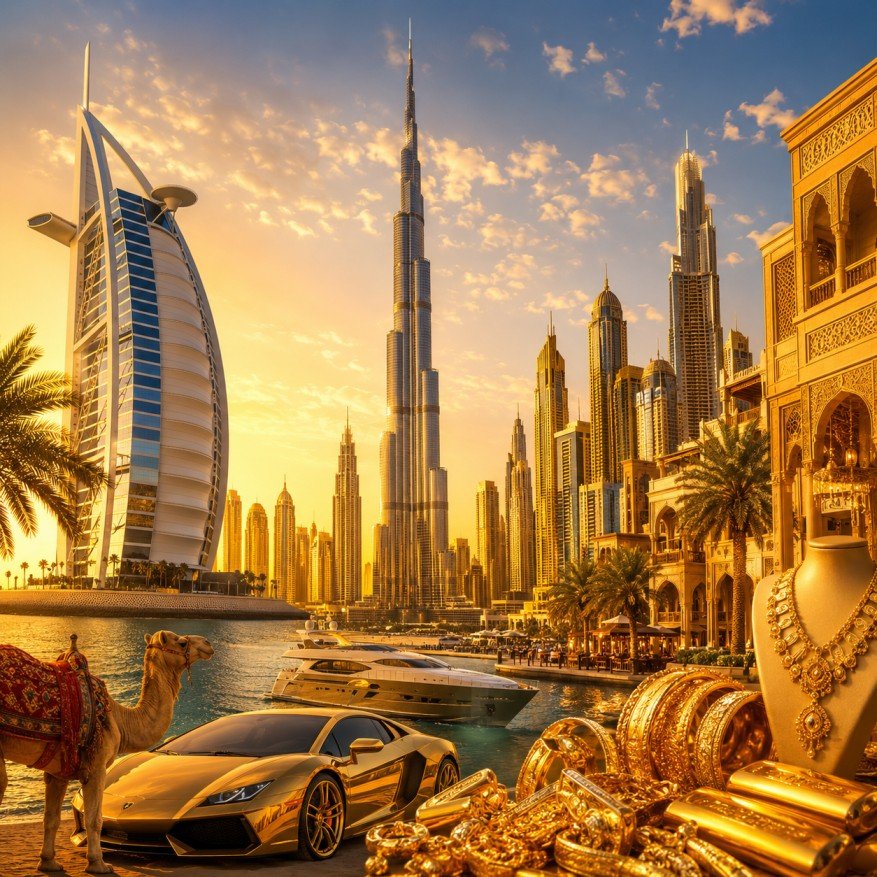
Dubai stands as the most famous and glamorous city in the United Arab Emirates. Known worldwide for its iconic architecture, luxury shopping, tourism infrastructure, and rapid development, Dubai represents the epitome of modern urban achievement. The city has transformed from a small trading port into a global metropolis attracting millions of visitors annually and hosting thousands of international businesses. Dubai is the second largest emirate by area but the most populous city in the entire UAE with over 3.6 million residents.
The city is synonymous with superlatives: the world’s tallest building, the largest shopping mall by area, artificial islands shaped like palm trees, and countless other record-breaking developments. Whether you are planning a visit, considering relocation, or simply want to understand this remarkable city better, this comprehensive guide provides everything you need to know about Dubai.
TABLE OF CONTENTS
1. Overview and History of Dubai
2. Geography and Location
3. Climate and Weather
4. Government and Administration
5. Economy and Industry
6. Population and Culture
7. Major Attractions and Landmarks
8. Neighborhoods and Districts
9. Shopping and Retail
10. Food and Dining
11. Accommodation Options
12. Transportation and Getting Around
13. Activities and Entertainment
14. Business and Investment
15. Frequently Asked Questions
OVERVIEW AND HISTORY OF DUBAI
Dubai is located on the southern coast of the Persian Gulf in the eastern part of the UAE. The city serves as the capital of Dubai emirate and is the most internationally recognized UAE city. Dubai covers an area of approximately 4,114 square kilometers with a population exceeding 3.6 million people. The city has experienced explosive growth over the past two decades transforming from a desert settlement into a world-class metropolis.
Historically, Dubai was a small fishing village and pearl diving port. The discovery of oil in 1966 transformed the economy and provided capital for development. However, unlike Abu Dhabi with vast oil reserves, Dubai’s oil resources are limited. This limitation forced the emirate to diversify the economy early, focusing on trade, tourism, real estate, and financial services.
The 1990s marked the beginning of Dubai’s transformation into a modern city. Massive infrastructure projects began including the development of Port Jebel Ali, which became one of the world’s largest container ports. The government promoted Dubai as a business hub and tourist destination. Tax incentives and business-friendly policies attracted international companies.
The 2000s saw accelerated development with iconic projects. The Burj Al Arab hotel opened in 1999 establishing Dubai’s luxury image. The Palm Islands development began reshaping the coastline with artificial islands. The Burj Khalifa construction commenced symbolizing Dubai’s ambition. The Dubai International Financial Centre opened to serve as a regional financial hub.
The 2008 global financial crisis temporarily slowed development but Dubai recovered quickly. Investments in tourism and hospitality proved resilient. Infrastructure continued expanding with metro system development. The city hosted Expo 2020 showcasing global innovation. Today Dubai is one of the world’s top tourist destinations and a leading financial center.
GEOGRAPHY AND LOCATION
Dubai occupies the coastal plains of the Persian Gulf with limited mountainous terrain. The city sits on a natural bay that historically served as a trading port. The Dubai Creek divides the older neighborhoods including Deira and Bur Dubai. Modern development extends south and inland from the creek.
The coastline stretches for approximately 72 kilometers featuring beaches and coastal development. Mangrove forests exist in protected areas providing ecological value. Coral reefs support marine biodiversity in designated areas. The desert inland from coastal areas provides space for urban expansion.
The Palm Islands represent artificial islands developed through landfill technology. Palm Jumeirah is the largest with residential villas and hotels. Palm Jebel Ali was developed for residential purposes. These islands expanded the coastline and created premium waterfront properties.
The World Islands is another artificial development consisting of small islands shaped like a world map. These islands were developed for exclusive residential and resort use. The development required massive engineering and environmental considerations.
Dubai’s strategic location makes it a natural hub between Europe, Asia, and Africa. The city serves as a crossroads for international trade and business. The geographic position contributed to its development as a commercial center.
CLIMATE AND WEATHER
Dubai experiences an extremely hot desert climate with minimal rainfall. Summers are intensely hot while winters are mild and pleasant. The climate significantly influences daily life, tourism patterns, and economic activities.
Summer months from June through September see extreme heat. Temperatures regularly reach 45 to 50 degrees Celsius (113 to 122 degrees Fahrenheit). Humidity levels are very high, particularly in coastal areas, making the heat feel more intense. Many residents and businesses operate during early morning and late evening hours. Air conditioning is essential during summer months. Outdoor activities are generally avoided during midday hours. Many expatriates travel outside Dubai during summer for relief from heat.
Winter months from December through February offer ideal weather conditions. Temperatures range from 15 to 25 degrees Celsius (59 to 77 degrees Fahrenheit). Humidity is lower creating comfortable conditions. Rainfall is minimal but occasional showers may occur. Winter months see peak tourist activity. Outdoor activities and sightseeing are most enjoyable. Events and festivals are typically scheduled during winter.
Spring months from March to May see gradually increasing temperatures. March temperatures range from 20 to 30 degrees Celsius (68 to 86 degrees Fahrenheit). April and May temperatures rise to 30 to 40 degrees Celsius (86 to 104 degrees Fahrenheit). Shamal winds (northwesterly winds) bring dust and sand during spring. Tourism activity begins to decline as weather becomes hotter.
Autumn months from October to November see temperatures gradually decreasing. October temperatures range from 30 to 40 degrees Celsius (86 to 104 degrees Fahrenheit). November temperatures drop to 20 to 30 degrees Celsius (68 to 86 degrees Fahrenheit). Weather begins to improve as summer ends. Tourism activity increases as winter approaches.
Annual rainfall is extremely minimal averaging less than 150 millimeters (6 inches) annually. Most rain falls during winter months in sporadic showers. Rain is typically light and brief. Droughts are common. Desalination plants provide freshwater for drinking and household use.
GOVERNMENT AND ADMINISTRATION
Dubai is an emirate within the federal structure of the United Arab Emirates. The emirate is ruled by an emir who also serves on the Supreme Council of the UAE. The current Emir of Dubai is Sheikh Mohammed bin Rashid Al Maktoum who has ruled since 2006. The Crown Prince is Sheikh Hamdan bin Mohammed bin Rashid Al Maktoum who serves as heir.
The Executive Council of Dubai oversees the emirate’s local government. The council includes the Emir, Crown Prince, and appointed ministers. Various departments manage specific functions including health, education, finance, and infrastructure.
Dubai maintains its own judiciary system alongside the federal system. Local courts handle civil and criminal cases according to UAE law. Sharia courts address family law matters. The Court of Appeal handles cases appealed from lower courts.
The Dubai Municipality oversees city planning and development. Building permits, licenses, and development approvals are issued by municipal authorities. Urban planning and infrastructure development are coordinated through the municipality. The municipality enforces building codes and zoning regulations.
The Dubai Police force maintains law and order throughout the emirate. Crime prevention and investigation are primary functions. Traffic enforcement is a significant responsibility. Emergency services coordination falls under police authority.
The General Directorate of Residency and Foreigners Affairs manages immigration and residency. Visas and residence permits are issued through this authority. Expatriate registration and compliance are handled by this department.
The Emirates Investment Authority and other investment bodies promote business development. Incentives and support are provided to investors. Business-friendly policies encourage economic development.
ECONOMY AND INDUSTRY
Dubai has developed one of the most diversified economies globally. While oil revenues provided initial capital, the economy now depends on multiple sectors. Tourism, real estate, retail, finance, and trade form the economic foundation.
Tourism is the largest and most important economic sector. Dubai receives over 16 million international visitors annually. Hotels, restaurants, attractions, and entertainment venues employ hundreds of thousands. Tourism generates massive government revenues and foreign exchange. The city constantly develops new attractions to maintain tourism growth.
Real estate and construction represent major economic drivers. Property development creates employment and generates government revenues through taxes and fees. Residential developments house both locals and expatriates. Commercial developments accommodate offices and retail. Tourism-related properties include hotels and resorts. Property values have appreciated significantly over time.
Retail and shopping form a significant economic sector. Shopping malls attract both locals and tourists. The retail sector employs thousands of workers. International brands maintain regional headquarters in Dubai. E-commerce is growing rapidly with online shopping becoming common.
Finance and banking services are important economic sectors. The Dubai International Financial Centre operates as a regional financial hub. Banks provide commercial and investment services. Insurance companies operate throughout Dubai. Stock market activities and investment funds are based in Dubai.
Trade and logistics are traditional sectors that remain important. Port Jebel Ali handles millions of container annually. Free zones provide tax incentives for import, export, and distribution. Numerous warehousing facilities support logistics operations.
Manufacturing and industrial production occur in designated zones. Food processing facilities serve local and regional markets. Aluminum and other materials are produced. Light manufacturing supports local industries.
Oil and gas production provides some government revenue but is less significant than other sectors. Upstream and downstream petroleum operations exist. Gas production supplies some power generation needs.
Service sectors including hospitality, healthcare, and education employ large portions of the workforce. Hotels, restaurants, and entertainment venues provide employment. Medical facilities serve residents and medical tourists. Educational institutions serve local and expatriate families.
POPULATION AND CULTURE
Dubai is remarkably multicultural with approximately 85 to 90 percent of the population being expatriates. Over 200 nationalities are represented in the population. Indian, Pakistani, Filipino, and Arab workers form large communities. Western expatriates work in business, finance, and professional services.
Islam is the official religion with Islamic values guiding law and governance. Friday is the holy day when Muslims gather for prayers. However, the emirate tolerates other religions and provides spaces for worship. Churches, temples, and other religious facilities serve non-Muslim populations. Religious harmony is promoted and practiced.
Arabic is the official language but English is widely spoken. Business communication is conducted in English. Many residents speak their native languages in expatriate communities. School instruction includes both Arabic and English. Government communications are conducted in Arabic and English.
Emirati citizens form a small percentage of the population but hold most government positions. Citizens receive preferential treatment in employment and education. The Emirati culture is respected and preserved through law and policy. Traditional values are maintained alongside modernization.
Expatriate workers come seeking employment opportunities and higher incomes. Many plan to work temporarily and return home. Long-term residents have established communities. Expatriate workers represent diverse professions and skills.
Family structures vary among different populations. Emirati families maintain traditional structures with extended family importance. Expatriate families adapt to local customs while maintaining home country traditions. Schools and communities support diverse family structures.
Social customs reflect Islamic values combined with cosmopolitan influences. Business attire follows international standards. Social gatherings often separate men and women initially though this is becoming less common. Respect for elders and authority is valued. Hospitality and generosity are appreciated cultural traits.
Food culture is diverse reflecting the multinational population. Emirati, Lebanese, Indian, Pakistani, and international cuisines are commonly available. Family meals are important occasions. Shared meals build relationships and community bonds.
MAJOR ATTRACTIONS AND LANDMARKS
Burj Khalifa is the world’s tallest building at 828 meters. The structure dominates the Dubai skyline and is visible from great distances. The building contains residential apartments, corporate offices, and the Armani Hotel. Observation decks on the 124th and 148th floors provide panoramic views. The elevator reaches the 148th floor in approximately one minute. Approximately 100,000 workers were employed during construction. The building consumes massive amounts of electricity and water. The construction took approximately five years to complete.
Dubai Mall is the world’s largest shopping mall by area with over 1,200 retail stores. The mall attracts approximately 80 million visitors annually. Anchor stores include luxury department stores and major retailers. Food courts and restaurants provide diverse dining options. The mall includes an aquarium, skating rink, and entertainment facilities. Parking accommodates thousands of vehicles. The mall connects to Burj Khalifa.
The Dubai Fountain is a spectacular water show set in an artificial lake. The fountain shoots water up to 150 meters in height. Choreographed performances set to music occur multiple times daily. The fountain displays cost approximately 218 million US dollars. Maintenance requires significant ongoing investment. The fountain is visible from the mall and surrounding areas.
Palm Jumeirah is an artificial island shaped like a palm tree. The island features luxury villas, hotels, and resorts. The development expanded Dubai’s coastline by 78 kilometers. The island was built using 94 million cubic meters of sand and rock. The island cost approximately 12 billion US dollars to develop. Residents and visitors enjoy pristine beaches and resort amenities.
Burj Al Arab is an iconic hotel shaped like a sail. The hotel stands on an artificial island in the Persian Gulf. The hotel features extremely luxurious accommodations and service. Only suites are available with the smallest being approximately 170 square meters. The hotel employed approximately 10,000 workers during construction. The hotel costs approximately 1.4 billion US dollars. The hotel is one of the world’s most recognizable buildings.
The Gold Souk is a traditional marketplace featuring gold jewelry and precious metals. The souk sells thousands of gold items in various styles. Gold is sold by weight with varying purity levels. Haggling is common in souk transactions. The souk provides authentic Arabian shopping experiences. The narrow lanes and traditional architecture create historical atmosphere. Vendors offer customization services for jewelry designs.
Deira and Bur Dubai form the historic old city area. Traditional architecture is preserved in these neighborhoods. Traditional souks sell textiles, spices, handicrafts, and goods. The Dubai Creek separates Deira and Bur Dubai historically. Abra boats (traditional wooden boats) ferry passengers across the creek. Heritage buildings showcase traditional architecture. The area provides cultural experiences and historical context.
The Dubai Aquarium and Underwater Zoo showcase marine life. The aquarium contains approximately 33,000 marine animals. Approximately 280 species of aquatic creatures are represented. The aquarium is located in Dubai Mall. The underwater tunnel provides close viewing of large fish. Interactive programs educate visitors about marine ecosystems. Schools and families visit for education and entertainment.
NEIGHBORHOODS AND DISTRICTS
Downtown Dubai is the central business district featuring high-rise development. Modern office towers accommodate corporate headquarters and businesses. Shopping malls provide retail and dining. Hotels cater to business travelers. The area is centered around Burj Khalifa and Dubai Mall.
The Marina is a man-made marina featuring residential towers and hotels. Modern high-rise apartments line the waterfront. The marina includes restaurants and retail. The area attracts young professionals and families. Beach access is available to residents and visitors.
Palm Jumeirah is the premier island development with luxury properties. Villas and apartments command premium prices. The island includes exclusive hotels and resorts. Residents enjoy private beaches. Security and gating provide exclusivity.
Jumeirah is an upscale residential area with villa communities. Beautiful beaches provide waterfront living. The area includes schools and shopping. Families prefer the residential character.
Arabian Ranches is a planned villa community with traditional Arabic-influenced architecture. The community features large villas with ample space. The area includes schools, golf courses, and retail. Families seeking space prefer this area.
Business Bay is a mixed-use development with offices and residences. The area is designed for business professionals. Modern apartments provide accommodations. Retail and dining serve residents.
Dubai Silicon Oasis is a technology and innovation hub. Tech companies maintain headquarters and offices. The area includes schools and amenities. The area attracts technology professionals.
International City is an affordable residential area for budget-conscious residents. Large populations of workers live in this area. Apartments are basic but functional. The area has shops and basic services.
SHOPPING AND RETAIL
Dubai is a shopper’s paradise with world-class shopping facilities. Tax-free shopping and diverse selections attract visitors worldwide. Shopping is a major activity for residents and tourists.
The Dubai Mall features over 1,200 stores including luxury brands. International fashion designers maintain flagship stores. Electronics retailers sell the latest technology. Jewelry stores offer precious gems and watches. The mall attracts millions of shoppers annually. The mall operates year-round providing climate-controlled shopping.
Marina Mall offers shopping with waterfront views. Fashion stores and specialty retailers are available. Dining options include international cuisines. The mall provides upscale shopping experiences.
The Galleria is a luxury mall featuring high-end retailers. Designer brands occupy prominent locations. Jewelry and watch boutiques showcase premium collections. Fine dining restaurants serve upscale clientele. The mall caters to luxury shoppers.
Souks offer traditional shopping experiences. The Gold Souk sells jewelry and precious metals. The Spice Souk offers traditional spices and herbs. The Textile Souk features fabrics and traditional garments. Haggling is customary and expected. Traditional architecture creates authentic atmosphere.
Street markets and night markets operate seasonally. Open-air stalls sell goods at competitive prices. Entertainment and food vendors create festive atmosphere. Markets attract both locals and tourists.
Shop during official shopping festival seasons for special discounts. The Dubai Shopping Festival attracts millions of shoppers. Retailers offer significant markdowns during festival periods. Entertainment and events accompany shopping. The festival generates massive retail activity.
Online shopping is increasingly popular with numerous e-commerce platforms. International retailers ship to Dubai. Local retailers operate online stores. Delivery services bring purchases to homes. Returns and exchanges are available.
FOOD AND DINING
Dubai offers diverse cuisine reflecting the international population. Fine dining restaurants serve Michelin-caliber cuisine. Casual restaurants provide relaxed atmospheres. Street food vendors offer quick and inexpensive meals.
Traditional Emirati cuisine is available in local restaurants. Hummus, falafel, and kebab represent traditional dishes. Mansaf and biryani are special occasion dishes. Dates and Arabic coffee remain important cultural items. Local restaurants provide authentic traditional experiences.
Lebanese cuisine is popular reflecting Arab populations. Mezze platters offer diverse small dishes. Grilled meats and seafood are specialties. Wine selections complement Lebanese meals. Lebanese restaurants are found throughout Dubai.
Indian and Pakistani cuisine is widely available. Curries, breads, and rice dishes are popular. These cuisines appeal to large Asian populations. Restaurants range from budget to upscale. Spices and flavors are authentic and intense.
Asian cuisines including Chinese, Thai, and Vietnamese are represented. Sushi restaurants serve Japanese cuisine. Dim sum establishments offer Chinese breakfast. Thai restaurants provide authentic preparation. Asian cuisines appeal to diverse populations.
Italian restaurants serve pasta, pizza, and Mediterranean dishes. Fine dining Italian establishments offer upscale experiences. Casual pizzerias provide relaxed atmospheres. Italian cuisine appeals to Western populations.
French cuisine is available in upscale dining establishments. Michelin-starred chefs operate some restaurants. Fine dining provides premium service and ambiance. French cuisine appeals to affluent residents and visitors.
Seafood is featured prominently reflecting the coastal location. Fresh fish and shellfish are prepared in various styles. Beachfront restaurants specialize in seafood. Prices reflect the premium nature of seafood.
Steakhouses serve premium cuts of beef and meat. Fine dining steakhouses cater to business diners. Quality meat and service justify high prices. Steakhouses appeal to Western populations.
ACCOMMODATION OPTIONS
Luxury five-star hotels provide world-class hospitality. Iconic hotels including Burj Al Arab and Emirates Palace offer extreme luxury. Ornate designs showcase architectural excellence. Premium services and amenities are standard. Prices reflect the luxury level. Fine dining restaurants serve international cuisines.
Four-star hotels provide quality accommodations with good amenities. Comfortable rooms feature modern furnishings. Business facilities serve corporate guests. Swimming pools and fitness centers are available. Prices are moderate for quality service.
Three-star hotels offer basic comfortable accommodations. Budget travelers and backpackers use these hotels. Rooms include essential furnishings and air conditioning. Restaurants or cafes serve basic food. Prices are lower than higher category hotels.
Apartment rentals provide residential-style living. Studios and one-bedroom apartments serve individuals and couples. Larger apartments accommodate families. Kitchen facilities allow meal preparation. Longer stays qualify for monthly discounts. Apartment rentals provide more space than hotels.
Resort properties combine hotel accommodations with recreational facilities. Beach resorts provide water sports and entertainment. Desert resorts offer unique Arabian experiences. All-inclusive packages simplify vacation planning. Resorts appeal to families seeking comprehensive experiences.
Hostels provide budget accommodations for backpackers. Shared dormitory rooms reduce costs. Common areas facilitate social interaction. Basic facilities and services are provided. Prices are significantly lower than hotels.
ACTIVITIES AND ENTERTAINMENT
Beach activities provide water recreation and relaxation. Swimming at designated beaches is popular. Water sports including jet skiing and parasailing are available. Beach clubs provide cabanas and food service. Beaches attract residents and tourists year-round.
Desert safaris offer adventure and traditional experiences. Four-wheel vehicle tours explore desert landscapes. Dune bashing provides thrilling off-road experiences. Sunset viewing in the desert is romantic. Evening tours include traditional camps with entertainment and meals. Camel riding experiences appeal to many visitors.
Shopping provides entertainment and purchasing opportunities. Shopping malls offer extensive retail options. Souks provide traditional shopping experiences. Shopping festivals provide special deals and entertainment. Shopping generates significant tourist and local activity.
Dining and nightlife entertainment is extensive. Fine dining restaurants offer culinary experiences. Casual restaurants provide relaxed atmospheres. Nightclubs and bars provide evening entertainment. Beach clubs combine dining with entertainment.
Theme parks and attractions provide family entertainment. The Dubai World Trade Centre hosts various events. Amusement parks provide rides and attractions. Indoor facilities provide alternatives during extreme heat.
Sports activities appeal to athletic visitors. Golf courses provide championship-level play. Tennis facilities accommodate players of all levels. Football and basketball courts serve sports enthusiasts. Fitness centers and gyms are widely available.
Cultural activities provide learning experiences. Museums showcase local and international art. Heritage sites preserve historical significance. Cultural performances feature traditional music and dance. Educational programs teach cultural practices.
BUSINESS AND INVESTMENT
Dubai is a leading international business center. The business environment is business-friendly with supportive policies. Numerous multinational corporations maintain regional headquarters. The financial sector is well-developed and competitive. Investment opportunities exist in multiple sectors.
The Dubai International Financial Centre provides infrastructure for financial services. Banks, investment firms, and insurance companies operate there. Financial regulation is transparent and professional. Stock market activities support investment. Wealth management services serve high-net-worth individuals.
Free zones throughout Dubai offer tax incentives for businesses. Import, export, and distribution benefit from zone privileges. Numerous free zones serve specific industries. Business registration is streamlined in free zones. Thousands of companies operate in free zones.
Foreign investment is encouraged through supportive policies. Profit repatriation is permitted without restrictions. Ownership structures vary by sector with some foreign ownership allowed. Business registration is efficient and transparent. Tax treatment of foreign businesses is favorable.
Real estate investment opportunities exist in residential and commercial properties. Property ownership is available to foreigners in designated areas. Property appreciation has been significant historically. Rental yields provide income opportunities. Property development companies offer diverse options.
Tourism and hospitality investment opportunities are substantial. Hotel developments continue despite market saturation. Themed attractions offer investment potential. Resort developments serve luxury markets. Franchise opportunities exist for international brands.
Technology and innovation present investment opportunities. Tech startups receive government support and investment. Research and development facilities are being developed. The government promotes knowledge economy. Tech talent is available locally and internationally.
FREQUENTLY ASKED QUESTIONS
Question: Is Dubai expensive?
Answer: Dubai is generally expensive for accommodations, dining, and shopping. Luxury hotels and fine dining cost significantly more than many other destinations. Budget accommodations and food options exist at lower prices. Shopping is tax-free which provides savings. Overall cost depends on choices and lifestyle. Mid-range options provide good value.
Question: How many days should I spend in Dubai?
Answer: Three to four days allows exploration of major attractions. A week permits deeper engagement with culture and attractions. Ten days or more allows relaxation and surrounding area exploration. Business travelers often stay three to five days. The duration depends on interests and available time.
Question: What is the best time to visit Dubai?
Answer: November through March offers the most pleasant weather. Temperatures are comfortable for outdoor activities. December through February see peak tourist activity. Accommodation and attraction prices may be higher during peak season. April and October offer shoulder season advantages with fewer crowds.
Question: How is the public transportation system?
Answer: Dubai Metro provides rapid transit connecting major areas. The metro operates on a clean modern system. Bus services supplement metro coverage. Taxis and ride-sharing services are readily available. Traffic congestion can be significant during peak hours.
Question: What are the top attractions to visit?
Answer: Burj Khalifa is essential visiting for views. Dubai Mall offers extensive shopping and entertainment. The Palm Islands provide unique experiences. Traditional souks offer cultural experiences. Beaches provide relaxation. Desert safaris offer adventure. The variety allows diverse interests.
Question: Is Dubai safe for tourists?
Answer: Dubai is very safe with low crime rates. The emirate is consistently ranked among the world’s safest cities. Police presence is visible throughout. Visitors report feeling safe. Normal precautions are adequate.
Question: Can women visit Dubai alone?
Answer: Yes, Dubai is safe for solo female travelers. The emirate has strong security and low crime. Women should dress modestly to respect local culture. Female visitors report positive experiences. Transportation and accommodation are readily available.
Question: What is the dress code?
Answer: Modest clothing is recommended to respect Islamic culture. Long pants or skirts are appropriate. Shirts with sleeves are preferred. Swimwear is acceptable at beaches and pools. Business dress follows international standards. Covering knees and shoulders shows respect.
Question: Is English widely spoken?
Answer: English is widely spoken in Dubai. Hotel staff, restaurant workers, and tour guides speak English. Business communication is in English. Street signs include English. Learning basic Arabic is appreciated but not necessary.
Question: What currency should I use?
Answer: The United Arab Emirates Dirham (AED) is the official currency. One AED equals approximately 0.27 USD. ATMs are widely available. Credit cards are accepted at hotels and restaurants. Currency exchange is available at banks and money changers.