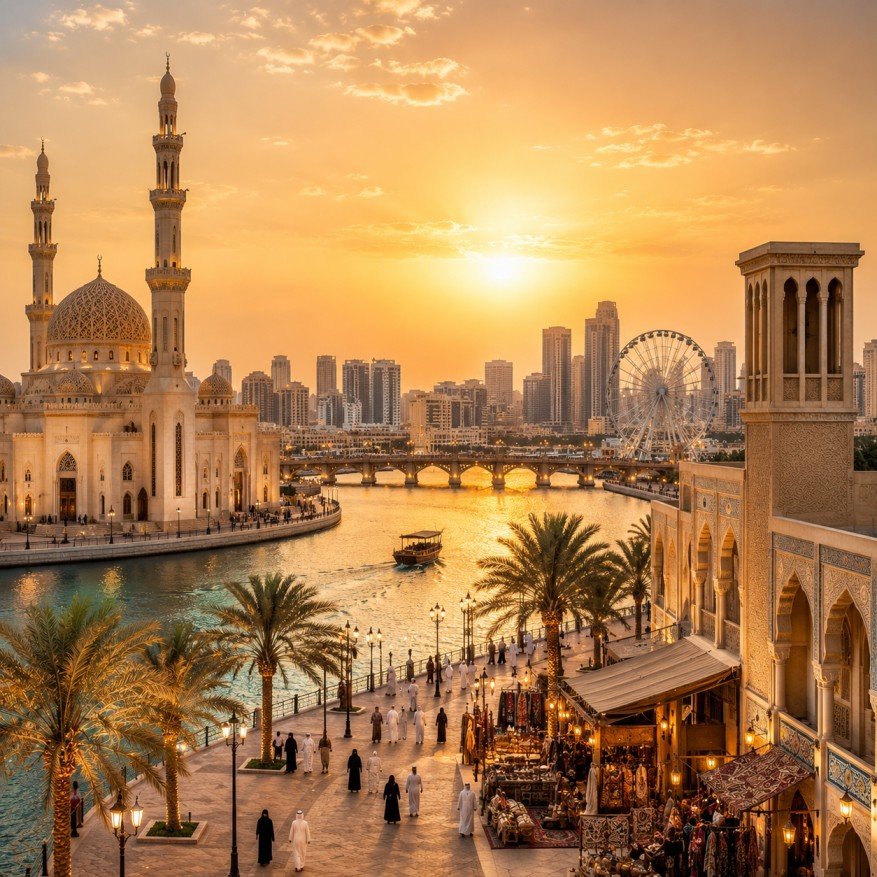
Sharjah stands as the cultural capital of the United Arab Emirates. Located between Abu Dhabi and Dubai, Sharjah offers a distinctive character that emphasizes heritage preservation, cultural values, and authentic Arabian experiences. The emirate is known for its numerous museums, beautiful Islamic architecture, vibrant art galleries, and traditional souks that showcase Emirati culture. With a population of approximately 1.9 million people, Sharjah represents the largest concentration of cultural institutions in the UAE.
Unlike its wealthier neighbors Abu Dhabi and Dubai, Sharjah has maintained a stronger connection to traditional values while developing modern infrastructure. The emirate offers visitors and residents a more authentic experience of Emirati life combined with contemporary amenities. Sharjah serves as the intellectual and cultural center of the UAE attracting artists, scholars, and students.
TABLE OF CONTENTS
1. Overview and Location of Sharjah
2. Geography and Natural Features
3. History and Cultural Development
4. Climate and Weather
5. Government and Administration
6. Economy and Industry
7. Population and Culture
8. Museums and Cultural Institutions
9. Religious and Historical Sites
10. Markets and Shopping
11. Food and Dining
12. Accommodation Options
13. Activities and Entertainment
14. Transportation and Getting Around
15. Frequently Asked Questions
OVERVIEW AND LOCATION OF SHARJAH
Sharjah is located on the coast of the Persian Gulf between Abu Dhabi to the south and Dubai to the north. The emirate covers approximately 2,590 square kilometers making it the third largest emirate by area. The population exceeds 1.9 million people making it the second most populous emirate after Dubai. Sharjah city serves as the capital and largest city within the emirate.
The name Sharjah derives from an Arabic word meaning “the rising sun” or “to rise.” Historically, Sharjah was an important trading port and pearling center before oil discovery. The emirate has evolved into a hub for culture, education, and authentic Arabian experiences.
Sharjah is strategically positioned between Dubai and Abu Dhabi creating accessibility to both major cities. The proximity to other emirates makes Sharjah convenient for those seeking cultural experiences without the overwhelming development of Dubai. The emirate attracts visitors seeking authenticity and cultural immersion.
GEOGRAPHY AND NATURAL FEATURES
Sharjah encompasses diverse geographical features including coastal areas, inland plains, and some elevated regions. The emirate has an extensive coastline along the Persian Gulf providing beaches and marine resources. The coast features sandy beaches, mangrove forests, and protected marine areas.
The inland regions consist primarily of desert landscape with some sandy plains. Agricultural areas exist in designated regions supporting date palm plantations and vegetable farming. Wadi areas provide seasonal water flow during rare rainfall periods.
Sharjah includes several islands offshore. The largest islands serve various purposes including tourism, conservation, and residency. Some islands have been developed for resort and leisure purposes. Protected islands serve as wildlife sanctuaries preserving natural ecosystems.
The Al Qasba is a waterfront development in central Sharjah. The crescent-shaped waterfront promenade provides recreational space. Parks and walking paths line the waterfront. Dining and entertainment venues serve residents and visitors. The development has become a social hub for the community.
Khaled Lagoon provides a scenic water feature in central Sharjah. The lagoon is surrounded by parks and recreational facilities. Water sports and leisure activities are available. The lagoon provides a gathering place for residents.
HISTORY AND CULTURAL DEVELOPMENT
Sharjah has a rich history as an important pearling and trading port. Pearl diving was the primary economic activity for centuries. The pearling industry attracted merchants and families accumulating significant wealth. Pearling families established trade networks throughout the region.
The discovery of oil in 1974 transformed Sharjah’s economy. However, the oil reserves were smaller than Abu Dhabi and Dubai requiring economic diversification. The emirate invested heavily in education and cultural institutions differentiating itself from neighboring emirates.
Sheikh Sultan bin Muhammad Al Qasimi became the ruler in 1987 and has guided Sharjah’s development toward culture and education. Under his leadership, Sharjah invested in museums, universities, and cultural programs. The emirate became known for preserving heritage and promoting the arts. Sheikh Sultan promoted Islamic and Arabic culture through institutional investment.
Sharjah was named the Cultural Capital of the Arab World in 1998 by UNESCO. This recognition affirmed the emirate’s commitment to culture and heritage preservation. The designation boosted cultural tourism and international recognition. Numerous cultural events and festivals are held annually in recognition of this status.
The emirate established free zones and industrial areas promoting economic diversification. Manufacturing, logistics, and trading activities developed. The free zones attracted numerous companies and created employment. Economic development occurred without abandoning cultural values.
CLIMATE AND WEATHER
Sharjah experiences a desert climate similar to other UAE emirates with extreme summer heat and mild winters. The coastal location moderates temperatures slightly compared to inland areas but still features intense summer conditions.
Summer months from June through September are extremely hot. Temperatures regularly exceed 45 degrees Celsius (113 degrees Fahrenheit). Peak afternoon temperatures can reach 48 to 50 degrees Celsius (118 to 122 degrees Fahrenheit). Humidity is very high in coastal areas making the heat feel oppressive. Air conditioning is essential for comfort and survival. Outdoor activities are minimized during midday hours. Most businesses reduce operating hours during summer.
Winter months from December through February offer pleasant weather. Temperatures range from 15 to 25 degrees Celsius (59 to 77 degrees Fahrenheit). Humidity levels are moderate. Occasional light rainfall may occur. Winter weather is ideal for outdoor activities and sightseeing. This period sees peak tourist activity and cultural events.
Spring months from March to May see temperatures rising. March temperatures range from 20 to 30 degrees Celsius (68 to 86 degrees Fahrenheit). April and May temperatures climb to 30 to 40 degrees Celsius (86 to 104 degrees Fahrenheit). Shamal winds bring dust and sand during spring months. Tourism activity declines as summer approaches.
Autumn months from October to November see decreasing temperatures. October temperatures range from 30 to 40 degrees Celsius (86 to 104 degrees Fahrenheit). November temperatures drop to 20 to 30 degrees Celsius (68 to 86 degrees Fahrenheit). Weather gradually becomes more comfortable. Tourism activity begins to increase.
Annual rainfall is minimal averaging less than 100 millimeters (4 inches) per year. Most precipitation occurs during winter months in light showers. Rainfall is sparse and unreliable. Droughts are common. Water scarcity drives reliance on desalination plants.
GOVERNMENT AND ADMINISTRATION
Sharjah is ruled by an emir who sits on the Supreme Council of the UAE. The current Emir of Sharjah is Sheikh Sultan bin Muhammad Al Qasimi who has ruled since 1987. The Crown Prince is Sheikh Mohammed bin Sultan bin Muhammad Al Qasimi who serves as heir to the throne.
The Executive Council of Sharjah oversees local government operations. The council includes the Emir, Crown Prince, and appointed ministers responsible for various departments. Coordination between departments ensures coherent policy implementation.
Various government departments manage specific functions. The Department of Education oversees schools and universities. The Department of Health manages healthcare facilities and services. The Department of Finance handles budgets and financial planning. The Department of Infrastructure manages utilities and public works.
The Sharjah Municipality oversees urban planning and development. Building permits and development approvals are issued by municipal authorities. Zoning regulations and building codes are enforced. Urban planning ensures organized growth.
The Sharjah Police maintains law and order throughout the emirate. Crime prevention and investigation are primary functions. Traffic enforcement is an important responsibility. Emergency services are coordinated through police authority.
The Department of Culture and Youth Development promotes cultural and artistic activities. Museums and cultural institutions receive support and funding. Cultural events and festivals are organized and promoted. Artists and performers receive support.
ECONOMY AND INDUSTRY
Sharjah has developed a diversified economy balancing traditional sectors with modern industries. Unlike oil-rich Abu Dhabi, Sharjah emphasized economic diversification from the beginning.
Oil and gas production provides some government revenue. Oil reserves in Sharjah are limited compared to Abu Dhabi and Dubai. The emirate does not rely heavily on oil for its economy. Oil revenues support government budgets but are not the primary income source.
Free zones throughout Sharjah promote business development. The Sharjah Free Zone offers tax incentives for companies. The Industrial Free Zone supports manufacturing and production. Multiple free zones attract diverse businesses. Thousands of companies operate in these zones providing employment.
Manufacturing and industrial production are important economic sectors. Food processing facilities produce goods for local and regional markets. Aluminum production is significant. Plastics manufacturing serves regional markets. Textiles and clothing production occurs. Light manufacturing supports various industries.
Trading and importing are traditional economic activities. Companies import goods from across the world. Distribution centers serve regional markets. Trading companies maintain offices and warehouses. Traditional trade routes enhanced Sharjah’s trading role.
Tourism is a growing economic sector. Cultural attractions draw visitors interested in heritage. Hotels and resorts accommodate visitors. Restaurants and entertainment serve tourists and residents. Tourism generates government revenues and employment.
Education and research institutions employ significant populations. Universities including the American University of Sharjah provide education. Research facilities support knowledge development. Education institutions attract international students. Faculty and staff create employment.
Retail and consumer services employ large portions of the workforce. Shopping centers and retail stores serve consumer needs. Restaurants and cafes provide food service. Entertainment venues serve residents and visitors. Service sector employment is substantial.
Financial services are available through banks and investment firms. Banking institutions provide commercial services. Insurance companies operate throughout Sharjah. Investment services support business and personal finance.
POPULATION AND CULTURE
Sharjah has a multicultural population with approximately 70 to 75 percent being expatriates. Indian, Pakistani, Egyptian, and Filipino workers form large communities. Western expatriates work in education, business, and professional services. The expat population contributes significantly to the economy.
Emirati citizens form the minority but hold most government positions. Citizens receive preferential treatment in employment and education. Traditional Emirati culture is preserved and promoted. Islamic values guide law and governance. Family structures remain important in Emirati society.
Islam is the official religion with Islamic values guiding all aspects of society. Friday is the holy day for Muslim prayer and gathering. Religious observance is integrated into daily life. The Quran and Islamic principles guide legal codes. Respect for religious practices is expected of all residents.
Arabic is the official language with English widely spoken. Government communications are conducted in Arabic. Schools provide instruction in both Arabic and English. Expatriate communities speak their native languages. Business communication often occurs in English.
Traditional Emirati customs and values are emphasized in Sharjah more than other emirates. Respect for elders remains important. Family bonds and loyalty are valued. Hospitality and generosity are cultural traditions. Modesty in dress and behavior is expected and enforced through law.
Social gatherings often bring communities together. Friday family gatherings are common. Celebrations and festivals bring people together. Community events strengthen social bonds. Neighborhoods often organize activities.
MUSEUMS AND CULTURAL INSTITUTIONS
The Sharjah Museum of Islamic Civilization houses extensive collections of Islamic art and artifacts. The museum displays items spanning centuries of Islamic history. Calligraphy and geometric designs showcase artistic traditions. Weaponry and armor reflect military heritage. Manuscripts and books preserve written knowledge. The museum provides comprehensive understanding of Islamic culture.
The Sharjah Heritage Museum documents the emirate’s history. The museum displays artifacts from pre-Islamic times through present. Traditional Bedouin life is depicted through exhibits. Pearl diving heritage is extensively covered. Traditional crafts and skills are demonstrated. The museum provides historical context for understanding Sharjah’s transformation.
The Sharjah Art Museum features contemporary and classical art. Regional artists display innovative works. International artists are also represented. Temporary exhibitions showcase diverse artistic movements. The museum promotes artistic expression and creativity. Art enthusiasts find inspiration in the collections.
The Sharjah Science Museum offers educational exhibits. Interactive displays engage visitors of all ages. Scientific principles are explained through hands-on activities. Technology and innovation are highlighted. The museum encourages scientific thinking and learning.
The Calligraphy Museum showcases Islamic calligraphic art. Traditional calligraphy techniques are displayed. Master works from renowned calligraphers are exhibited. The art form’s significance in Islamic culture is explained. Visitors appreciate the beauty and precision of calligraphy.
The Natural History Museum displays wildlife and geological specimens. Fossils and minerals educate about earth sciences. Marine life exhibits showcase coastal ecosystems. Local fauna and flora are highlighted. The museum promotes environmental awareness.
The Sharjah Fort represents historical military architecture. The fort was restored to preserve historical significance. Exhibits document the fort’s history. The fort served defensive purposes historically. The structure demonstrates traditional building techniques.
The Al Noor Mosque is an architectural masterpiece. The mosque is open to visitors of all faiths outside prayer times. The beautiful architecture showcases Islamic design principles. The interior features intricate geometric patterns. The mosque welcomes educational visitors to learn about Islam.
RELIGIOUS AND HISTORICAL SITES
The Al Noor Mosque stands as one of the most beautiful mosques in the UAE. The mosque welcomes visitors of all faiths outside prayer times. The architecture beautifully demonstrates Islamic design principles. The interior is decorated with intricate geometric patterns and calligraphy. Visitors learn about Islamic architecture and principles. Photography is permitted in designated areas. The mosque provides educational opportunities for all visitors.
The Sharjah Fort dates back to the eighteenth century. The fort was historically used for defense and administrative purposes. The structure demonstrates traditional Arabian military architecture. The fort has been carefully restored. Exhibits document the fort’s historical significance. The fort provides insight into historical governance and defense.
The Heritage Area preserves the old city and traditional architecture. Walking paths lead through restored buildings. Traditional houses showcase historical living spaces. Traditional souks demonstrate historical commerce. The area provides cultural immersion in historical settings. The atmosphere transports visitors to historical periods.
The Blue Souk features traditional covered market architecture. The distinctive blue and white tiling creates unique aesthetic. The souk sells textiles, carpets, spices, and handicrafts. The souk preserves traditional trading practices. Vendors haggle with customers in traditional manner. The souk provides authentic Arabian shopping experiences.
The Gold Souk offers traditional jewelry shopping. Gold items are sold by weight and purity. Traditional goldsmithing techniques are displayed. Vendors offer customization services. The souk provides authentic Arabian marketplace experiences.
MARKETS AND SHOPPING
Traditional souks provide authentic Arabian shopping experiences. The souks sell handmade goods, traditional items, and local products. Haggling is customary and expected in souk transactions. The narrow lanes and traditional architecture create historical atmosphere. The souks preserve traditional trading practices.
The Al Marjan Island development includes modern shopping facilities. Retail stores and dining options serve residents and visitors. The island provides recreational spaces and beaches. The development combines shopping with leisure activities.
Central Market (Souk Al Markazi) serves locals and tourists. Fresh produce, meats, and seafood are sold. Local goods and handicrafts are available. The market provides authentic local shopping experiences. Early morning shopping offers freshest goods.
Shopping malls provide modern retail environments. Air-conditioned facilities accommodate extensive shopping. International brands and local shops are represented. Restaurants and entertainment complement shopping. Malls serve families and shoppers seeking convenience.
Street markets and weekend markets operate seasonally. Open-air stalls sell goods at competitive prices. Vendors offer deals and negotiations. Markets create festive atmospheres. Entertainment and food vendors enhance the experience.
Retail districts throughout Sharjah serve consumer needs. Neighborhood shopping areas provide convenience. Small shops offer specialized products. Local entrepreneurs operate family businesses. Shopping supports local economy.
FOOD AND DINING
Traditional Emirati cuisine is widely available reflecting local culture. Hummus, falafel, and kebab are popular traditional dishes. Mansaf and biryani are special occasion preparations. Dates and Arabic coffee maintain cultural importance. Local restaurants provide authentic traditional experiences.
Lebanese cuisine is popular among residents and visitors. Mezze platters offer diverse small dishes. Grilled meats and seafood are specialties. Fresh vegetables and herbs feature prominently. Lebanese restaurants are found throughout Sharjah.
Indian and Pakistani cuisine is available reflecting large Asian populations. Curries, breads, and rice dishes are popular. Restaurant quality ranges from budget to upscale. Spices and authentic flavors characterize the cuisine. Asian cuisines appeal to diverse populations.
Seafood is featured prominently reflecting the coastal location. Fresh fish and shellfish are prepared in various styles. Grilled preparations highlight natural flavors. Seafood restaurants specialize in coastal cuisine. Prices reflect the premium nature of seafood.
International cuisines including Chinese, Thai, and Italian are represented. Diverse restaurants serve varied preferences. Quality and pricing vary by establishment. International cuisine appeals to expatriate populations.
Casual dining provides relaxed atmospheres and moderate prices. Family restaurants serve diverse customers. International chain restaurants operate throughout Sharjah. Street food vendors offer quick affordable meals. Casual options serve all populations.
Fine dining restaurants offer upscale experiences. Quality ingredients and preparation justify premium prices. Fine service and ambiance characterize these establishments. Business diners frequent upscale establishments.
ACCOMMODATION OPTIONS
Luxury hotels provide world-class service and amenities. Premium accommodations feature ornate designs. Extensive amenities include spas, fitness centers, and restaurants. Service quality meets international standards. Premium prices reflect luxury offerings.
Four-star hotels provide quality accommodations. Comfortable rooms feature modern furnishings. Business facilities serve corporate guests. Swimming pools and fitness centers are available. Moderate prices reflect good value.
Three-star hotels offer basic comfortable accommodations. Budget travelers use these facilities. Essential furnishings and air conditioning are provided. Basic restaurants or cafes serve food. Affordable prices appeal to budget travelers.
Apartment rentals provide residential-style living. Studios and one-bedroom units serve individuals and couples. Larger apartments accommodate families. Kitchen facilities allow meal preparation. Monthly rates offer significant discounts. Apartment rentals provide more space than hotels.
Guesthouses provide informal accommodations. Family-run establishments offer personal service. Basic but comfortable rooms are provided. Prices are lower than hotels. Guesthouses appeal to budget travelers.
Hostels provide budget accommodations for backpackers. Shared dormitory rooms minimize costs. Common areas facilitate social interaction. Basic facilities and services are available. Hostels appeal to budget travelers.
ACTIVITIES AND ENTERTAINMENT
Beach activities provide water recreation and relaxation. Swimming at designated beaches is popular. Water sports are available at equipped beaches. Beach clubs provide cabanas and dining. Beaches attract residents and visitors.
Shopping provides both entertainment and purchasing opportunities. Souks offer cultural experiences. Modern malls provide extensive selections. Shopping festivals attract large numbers. Shopping generates significant activity.
Dining and entertainment are extensively available. Restaurants serve varied cuisines. Nightclubs and bars provide evening entertainment. Entertainment venues offer diverse options.
Cultural activities provide learning and enrichment. Museums showcase art and history. Heritage sites preserve historical significance. Cultural performances feature traditional expressions. Educational programs teach cultural practices.
Water sports including jet skiing and parasailing appeal to adventure seekers. Boat tours explore coastal areas. Fishing trips attract enthusiasts. Water recreation serves active visitors.
Golf and sports activities appeal to athletes. Golf courses provide championship-level play. Tennis and basketball facilities serve players. Fitness centers and gyms provide workout facilities.
Family activities serve diverse age groups. Theme parks and entertainment venues attract children. Recreation centers offer activities for families. Family-friendly attractions accommodate all ages.
TRANSPORTATION AND GETTING AROUND
Sharjah International Airport connects the emirate to cities worldwide. The airport handles millions of passengers annually. Modern facilities include shops and restaurants. Public transportation connects airport to the city. Taxis and ride-sharing serve airport travelers.
Taxis are abundant throughout Sharjah. Metered taxis charge based on distance and time. Taxis accommodate multiple passengers. Drivers typically speak English. Tipping is not required but appreciated.
Ride-sharing services including Uber and Careem operate in Sharjah. Smartphone apps allow booking and fare estimation. Ride-sharing is often cheaper than taxis. Ratings ensure service quality. Payment is digital through apps.
Buses operated by the Roads and Transport Authority provide public transportation. Buses connect various neighborhoods and emirates. Air-conditioned buses provide comfort. Bus fares are inexpensive. Service quality varies but buses are generally reliable.
Rental cars allow independent transportation. International car rental companies operate throughout Sharjah. Drivers need valid international permits. Roads are well-maintained and marked. Parking is available in most locations. Petrol is inexpensive.
Walking is feasible in central areas and along waterfronts. Weather conditions affect walking comfort seasonally. Pedestrian paths provide safety. Shaded areas encourage walking.
Cycling is increasingly popular for recreation. Bike rentals serve recreational cyclists. Cycling paths are being developed in newer areas. The corniche provides scenic cycling routes.
Intercity buses connect Sharjah to other emirates. Coach services provide comfortable seating. Routes connect to Abu Dhabi and Dubai. Fares are reasonable for distances traveled.
FREQUENTLY ASKED QUESTIONS
Question: What makes Sharjah different from Dubai and Abu Dhabi?
Answer: Sharjah emphasizes culture and heritage preservation more than neighboring emirates. The emirate has stronger connections to traditional values. Museums and cultural institutions are more prominent. The pace of development is slower and more measured. The atmosphere is less commercial and more authentic. Sharjah offers cultural experiences rather than just luxury.
Question: Is Sharjah worth visiting if I am also visiting Dubai?
Answer: Yes, Sharjah provides distinctly different experiences from Dubai. The cultural heritage is emphasized more prominently. Authentic Arabian culture is more visible and preserved. Traditional souks provide authentic shopping. Museums document history and culture. The pace is slower and more relaxed. A day trip or overnight stay complements Dubai visits.
Question: How long should I spend in Sharjah?
Answer: One or two days allows exploration of major attractions. Three to four days permits deeper cultural engagement. A week allows relaxation and surrounding area exploration. Business travelers may stay three to five days. Duration depends on interests and available time.
Question: What is the best time to visit Sharjah?
Answer: November through March offers the most pleasant weather. Temperatures are comfortable for outdoor activities. December through February see peak tourism. Prices may be higher during peak season. April and October offer shoulder season advantages.
Question: How do I get from Dubai to Sharjah?
Answer: Regular buses connect Dubai and Sharjah. The journey takes approximately 30 to 45 minutes. Taxis and ride-sharing services are available. Rental cars provide flexibility. The journey is inexpensive using public transportation.
Question: What are the main attractions in Sharjah?
Answer: The Al Noor Mosque is architecturally stunning. Museums showcase culture and history. Traditional souks provide shopping and cultural immersion. The corniche provides scenic waterfront areas. The Heritage Area preserves old city architecture. Diverse attractions serve varied interests.
Question: Is Sharjah safe?
Answer: Yes, Sharjah is very safe with low crime rates. The emirate is consistently ranked among the safest cities. Police presence is visible throughout. Visitors report feeling safe. Normal precautions are adequate.
Question: Can I visit the mosque as a non-Muslim?
Answer: Yes, the Al Noor Mosque welcomes visitors of all faiths outside prayer times. Educational programs explain Islamic principles. Modest dress is required. Shoes must be removed before entering. Photography is permitted in designated areas. Respectful behavior is expected.
Question: What currency should I use?
Answer: The United Arab Emirates Dirham (AED) is the official currency. One AED equals approximately 0.27 USD. ATMs are widely available. Credit cards are accepted at major establishments. Currency exchange is available at banks.
Question: How is the public transportation?
Answer: Buses provide affordable public transportation. Service is generally reliable though schedules vary. The bus network covers most populated areas. Taxis and ride-sharing supplement bus service. Traffic congestion occurs during peak hours. Overall transportation is adequate though less developed than Dubai.