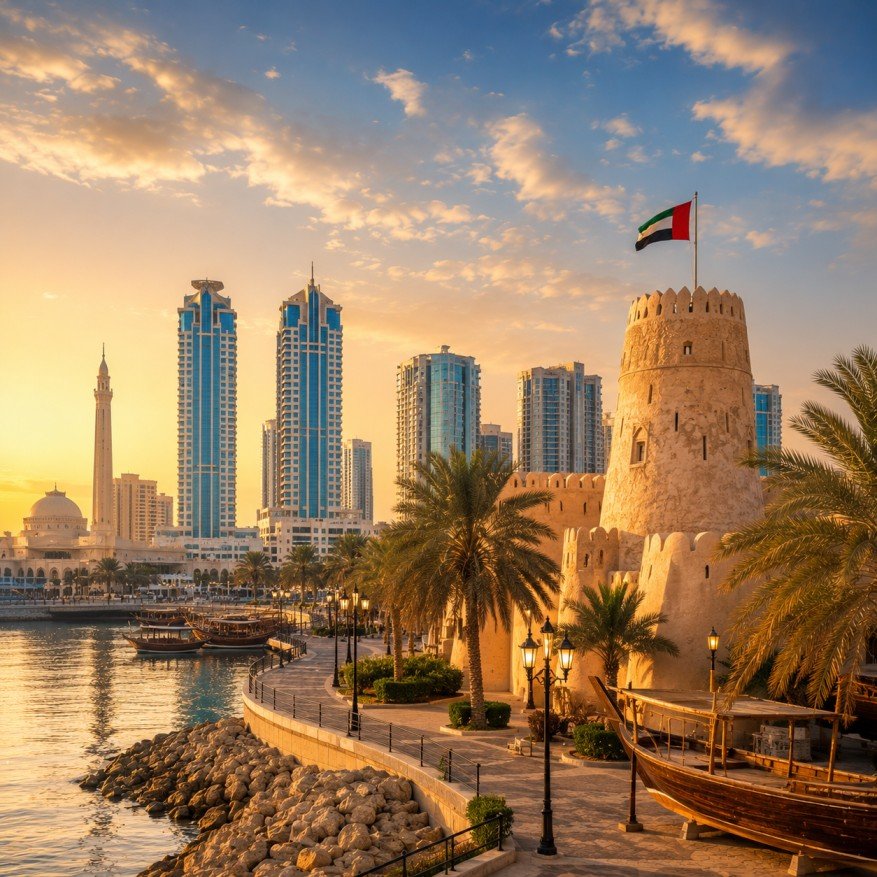
Ajman stands as the smallest emirate by area yet offers unique experiences that larger neighbors cannot provide. Located between Sharjah and Umm Al Quwain on the Persian Gulf coast, Ajman has transformed from a small fishing village into a modern developing emirate. With a population of approximately 400,000 people, Ajman represents the hidden gem of the UAE offering beautiful beaches, affordable accommodations, rich maritime heritage, and rapid modern development.
The emirate is often overlooked by tourists who focus on Dubai and Abu Dhabi, yet Ajman provides authentic experiences at more reasonable prices. The government has invested in tourism infrastructure while maintaining the emirate’s character. Ajman beach resorts offer pristine sand and clear waters. The emirate is becoming increasingly popular with families seeking affordability and peaceful atmospheres.
TABLE OF CONTENTS
1. Overview and Location of Ajman
2. Geography and Natural Features
3. History and Maritime Heritage
4. Climate and Weather
5. Government and Administration
6. Economy and Industry
7. Population and Culture
8. Beaches and Water Activities
9. Attractions and Landmarks
10. Shopping and Dining
11. Accommodation Options
12. Activities and Entertainment
13. Transportation and Getting Around
14. Real Estate and Investment
15. Frequently Asked Questions
OVERVIEW AND LOCATION OF AJMAN
Ajman covers an area of only 259 square kilometers making it the smallest emirate by area in the UAE. Despite its small size, the emirate has developed rapidly with modern infrastructure and tourism facilities. The population of approximately 400,000 people makes it one of the less populated emirates. Ajman city serves as the capital and largest city in the emirate.
The name Ajman may derive from Arabic words meaning gathering or assembly. Historically, Ajman was an important pearling and fishing port. The emirate maintained traditional maritime activities for centuries before modern development. The ruler of Ajman also sits on the Supreme Council of the UAE contributing to federal governance.
Ajman is strategically located on the coast between Sharjah to the west and Umm Al Quwain to the east. The emirate is approximately 45 kilometers north of Dubai. The proximity to major cities makes Ajman accessible yet separate from tourism crowds. The compact size allows exploration of the entire emirate in a short time.
GEOGRAPHY AND NATURAL FEATURES
Ajman features a relatively short but beautiful coastline along the Persian Gulf. Sandy beaches extend along the coast providing swimming and water activities. The coastal waters are clear and suitable for bathing. Mangrove forests exist in protected areas supporting marine ecosystems.
The inland area consists primarily of desert landscape. Some vegetated areas support agriculture and date palm plantations. Wadi areas provide seasonal water flow during rare rainfall. The terrain is relatively flat with minimal elevation changes. The desert extends inland from the coast.
Several small islands are located offshore from Ajman. Ajman Island serves as a development area. Other islands provide ecological value and wildlife habitat. The islands contribute to the emirate’s maritime character.
The Corniche area provides waterfront development with parks and recreational spaces. The corniche offers scenic views of the gulf. Restaurants and cafes serve residents and visitors. The waterfront is becoming increasingly developed for recreation.
Ajman Creek forms a natural feature dividing the city. The creek provides scenic beauty and maritime heritage connection. Traditional dhow boats use the creek. The creek area is being developed for tourism and recreation.
HISTORY AND MARITIME HERITAGE
Ajman has a long history as a maritime trading port and pearling center. Pearl diving formed the economic foundation for centuries. Pearling families accumulated significant wealth through pearl trading. The industry attracted merchants from across the region. Traditional pearling practices are documented and preserved.
Fishing has been an important economic activity throughout history. Fishing families developed extensive knowledge of sea routes and marine resources. Traditional fishing techniques are still practiced by some communities. Fishing heritage is celebrated and preserved through cultural institutions.
The discovery of oil in limited quantities occurred in Ajman but reserves are small. Oil production provides some government revenue but is not the primary income source. The emirate has diversified the economy away from oil dependence.
Traditional architecture reflected maritime culture and desert adaptation. Buildings used materials available locally including coral stone and palm fronds. Traditional wind towers provided natural cooling before modern air conditioning. Heritage buildings are preserved demonstrating historical construction techniques.
Ajman’s ruler has maintained strong connections to the federal government. The emirate joined the UAE federation in 1971. The current ruler is Sheikh Humaid bin Rashid Al Nuaimi who has led since 1981. His leadership has guided the emirate toward balanced development.
Modern development began in the 1990s with infrastructure projects. Tourist facilities and hotels were developed. The free zone was established promoting business development. Modern neighborhoods were built for residents. Development has been steady and planned.
CLIMATE AND WEATHER
Ajman experiences a desert climate typical of the Persian Gulf region. Summer months are extremely hot while winters are mild and pleasant. The coastal location provides some moderation of temperatures though summer remains intense.
Summer months from June through September see extreme heat. Temperatures regularly exceed 45 degrees Celsius (113 degrees Fahrenheit). Peak afternoon temperatures can reach 48 to 50 degrees Celsius (118 to 122 degrees Fahrenheit). Humidity is very high in coastal areas. Air conditioning is essential for comfort. Outdoor activities are minimized during midday. Most businesses reduce operating hours during summer.
Winter months from December through February offer pleasant weather. Temperatures range from 15 to 25 degrees Celsius (59 to 77 degrees Fahrenheit). Humidity is moderate and comfortable. Occasional light rainfall may occur. Winter weather is ideal for beach and outdoor activities. Peak tourist season occurs during winter months.
Spring months from March to May see temperatures gradually rising. March temperatures range from 20 to 30 degrees Celsius (68 to 86 degrees Fahrenheit). April and May temperatures climb to 30 to 40 degrees Celsius (86 to 104 degrees Fahrenheit). Shamal winds bring dust and sand. Tourism activity begins to decline.
Autumn months from October to November see temperatures decreasing. October temperatures range from 30 to 40 degrees Celsius (86 to 104 degrees Fahrenheit). November temperatures drop to 20 to 30 degrees Celsius (68 to 86 degrees Fahrenheit). Weather gradually becomes more comfortable. Tourism activity increases.
Annual rainfall is extremely minimal averaging less than 100 millimeters per year. Most precipitation occurs in winter months as light showers. Rainfall is sparse and unreliable. Droughts are common. Water scarcity requires desalination plants.
GOVERNMENT AND ADMINISTRATION
Ajman is ruled by an emir who sits on the Supreme Council of the UAE. The current Emir of Ajman is Sheikh Humaid bin Rashid Al Nuaimi who has ruled since 1981. The Crown Prince is Sheikh Ammar bin Humaid Al Nuaimi who serves as heir to the throne.
The Executive Council of Ajman oversees local government operations. The council includes the Emir and appointed ministers. Various departments manage specific government functions. Coordination between departments ensures consistent policy implementation.
The Ajman Municipality oversees urban planning and development. Building permits and development approvals are issued by the municipality. Zoning regulations and building codes are enforced. Urban planning guides the emirate’s development.
The Ajman Police maintains law and order throughout the emirate. Crime prevention and investigation are primary functions. Traffic enforcement and emergency services coordination are handled. Safety and security are maintained throughout the emirate.
The Department of Education manages schools and educational institutions. Basic and secondary education are provided. Technical and vocational training is available. Educational facilities serve the population.
The Department of Health oversees healthcare services. Hospitals and clinics provide medical care. Primary health centers serve communities. Emergency services are coordinated through health authorities.
The Ajman Free Zone Authority manages the free zone operations. Business licenses and registrations are handled by the authority. Tax incentives and business support are provided. Companies operating in the zone receive regulatory support.
ECONOMY AND INDUSTRY
Ajman has developed a diversified economy with multiple revenue sources. Unlike oil-rich emirates, Ajman early emphasized economic diversification.
Oil and gas production provides limited government revenue. The emirate’s oil reserves are smaller than neighboring emirates. Oil is not the primary income source. Production continues at modest levels.
The Ajman Free Zone is the primary economic driver. Thousands of companies operate in the free zone. Import, export, and distribution businesses benefit from zone privileges. Tax incentives attract numerous enterprises. The free zone provides substantial government revenue.
Manufacturing and industrial production occur throughout the emirate. Light manufacturing serves regional markets. Food processing facilities produce goods for local consumption. Textiles and clothing production exists. Industrial production creates employment.
Trading and importing are traditional economic activities. Import and export companies maintain operations. Distribution centers serve regional markets. Trading generates government revenue through customs.
Tourism is a growing economic sector. Hotels and resorts accommodate visitors. Restaurants and entertainment serve tourists. Water sports and beach activities attract visitors. Tourism creates employment and generates revenue.
Real estate development drives economic growth. Residential projects house growing populations. Commercial developments accommodate offices and retail. Tourism-related property includes hotels and resorts. Property development generates government revenues.
Retail and consumer services employ significant populations. Shopping centers serve consumer needs. Restaurants and cafes provide food service. Entertainment venues serve residents and visitors.
Port operations generate revenue through maritime trade. The Ajman port handles cargo and vessels. Port services support regional trade. Maritime activities continue as traditional economic sector.
POPULATION AND CULTURE
Ajman has a multicultural population with approximately 70 to 75 percent being expatriates. Indian, Pakistani, Egyptian, and Filipino workers form large communities. Western expatriates work in business, tourism, and professional services. The diverse population contributes to economic growth.
Emirati citizens form the minority of the population but hold most government positions. Citizens receive preferential employment in government. Traditional Emirati culture is preserved and promoted. Islamic values guide governance and social norms. Family structures remain important in Emirati society.
Islam is the official religion with Islamic values guiding all aspects of society. Friday is the holy day for Muslim prayer and gathering. Religious observance is integrated into daily life. The Quran and Islamic principles guide legal codes. Respect for religious practices is expected of residents.
Arabic is the official language with English widely spoken. Government communications are conducted in Arabic. Schools provide instruction in both Arabic and English. Expatriate communities speak native languages. Business communication often occurs in English.
Traditional Emirati customs emphasize family bonds and respect for elders. Hospitality and generosity are valued cultural traits. Modesty in dress and behavior is expected. Social gatherings strengthen community bonds. Celebrations bring people together.
Family structures emphasize extended family connections. Family decision-making is often collective. Children respect parental authority. Care for aging parents is a family responsibility. Family celebrations and gatherings are common.
BEACHES AND WATER ACTIVITIES
Ajman Beach is the main public beach offering swimming and recreation. The sandy beach stretches for several kilometers. Clear water is suitable for swimming. Beach clubs provide cabanas and food service. The beach is popular for families and couples.
Al Marjan Beach is a private beach area. The beach features pristine sand and clear waters. Resort facilities serve beach users. Water sports equipment is available for rent. The beach offers a more exclusive atmosphere than public beaches.
Water sports including jet skiing and parasailing are available at equipped beaches. Banana boat rides provide entertainment. Speedboat tours explore coastal areas. Snorkeling and diving opportunities exist in protected areas. Water sports appeal to active visitors.
Fishing trips depart from the coast for offshore fishing. Traditional fishing techniques are still practiced. Commercial fishing operations continue. Recreational fishing opportunities attract enthusiasts.
Boating and yacht charters are available for leisurely trips. Sailboats and motorboats can be rented. Guided tours explore the coast. Sunset cruises provide romantic experiences. Boating appeals to water enthusiasts.
Beach volleyball and sports activities are available. Organized tournaments occur seasonally. Informal games are played by residents. Sports equipment rental services operate. Beach sports provide recreation and fitness.
Swimming lessons and water safety training are available. Professional instructors teach beginners. Water safety is emphasized. Children and adults participate in lessons.
Mangrove tours explore protected coastal ecosystems. Guided boats navigate through mangrove forests. Marine life can be observed. Educational programs teach ecosystem importance. Tours appeal to nature enthusiasts.
ATTRACTIONS AND LANDMARKS
The Ajman Museum documents the emirate’s history and heritage. The museum is housed in a restored historical fort. Exhibits showcase pearling history and maritime heritage. Traditional household items and weapons are displayed. The museum provides historical context for understanding Ajman’s transformation.
The Corniche development provides scenic waterfront areas. Parks and walking paths line the waterfront. Restaurants and cafes serve residents and visitors. The corniche attracts evening strollers. The area is increasingly developed for recreation.
Ajman City Center is the main shopping and entertainment hub. Modern shopping facilities serve residents. Restaurants and cafes provide dining options. Entertainment venues offer leisure activities. The center is a gathering place for the community.
Beaches provide the main attraction for visitors. The coastline offers swimming and relaxation. Water sports and recreational activities are available. Beach resorts provide accommodation and amenities. Beaches are the primary draw for tourism.
The Friday Market offers traditional shopping experiences. Local goods and handicrafts are sold. Fresh produce and merchandise are available. The market provides authentic local experiences. Haggling is customary and expected.
Ajman Island development includes tourism facilities. Resorts and hotels accommodate visitors. Water sports and recreational activities are available. The island provides scenic views of the gulf.
Heritage areas preserve traditional architecture and culture. Walking through heritage neighborhoods provides historical immersion. Traditional houses demonstrate historical living spaces. The areas provide cultural experiences.
Sheikh Zayed Bridge connects Ajman to neighboring emirates. The bridge provides scenic views. Modern infrastructure demonstrates development. The bridge facilitates inter-emirate travel.
SHOPPING AND DINING
Shopping centers throughout Ajman serve consumer needs. Modern shopping facilities provide extensive retail options. Air-conditioned environments ensure comfort. Restaurants and cafes complement shopping.
Ajman City Center is the primary shopping destination. Large shopping mall with international and local brands. Department stores offer diverse merchandise. Restaurants serve varied cuisines. The center attracts shoppers from surrounding areas.
Traditional markets provide authentic Arabian shopping. The Friday Market sells local goods and handicrafts. Fresh produce and merchandise are available. Haggling is customary. The markets provide cultural experiences.
Gold shops sell jewelry and precious metals. Gold is sold by weight and purity. Traditional designs are available alongside modern styles. Customization services offer personalized jewelry.
Spice and herb shops sell traditional cooking ingredients. Cumin, coriander, saffron, and cardamom are available. Dried fruits and nuts supplement the selection. Shops provide authentic Arabian ingredients.
Textile shops sell fabrics and traditional garments. Quality fabrics serve diverse purposes. Traditional clothing is available. Tailoring services offer custom production.
Restaurants serve diverse cuisines reflecting the multicultural population. Traditional Emirati cuisine is available. Lebanese, Indian, and Asian cuisines are represented. International dining options serve varied preferences.
Seafood restaurants specialize in fresh fish and shellfish. Grilled preparations highlight natural flavors. Coastal locations provide scenic dining. Premium prices reflect seafood quality.
Casual dining provides relaxed atmospheres. Family restaurants serve diverse customers. International chain restaurants operate throughout Ajman. Street food vendors offer quick affordable meals.
Fine dining establishments offer upscale experiences. Quality ingredients and preparation justify premium prices. Service and ambiance characterize fine dining.
Beach clubs combine dining with waterfront views. Casual menus and relaxed atmospheres attract families. Evening dining provides sunset views.
ACCOMMODATION OPTIONS
Luxury resorts provide world-class service and facilities. Premium accommodations feature modern designs. Extensive amenities include spas, fitness centers, restaurants. Private beaches serve resort guests. Premium prices reflect luxury status.
Four-star hotels provide quality accommodations. Comfortable rooms feature modern furnishings. Business facilities serve corporate guests. Swimming pools and fitness centers are available. Moderate prices reflect good value.
Three-star hotels offer budget-friendly accommodations. Basic but comfortable rooms are provided. Essential furnishings and air conditioning included. Budget dining options available. Affordable prices appeal to budget travelers.
Apartment rentals provide residential-style living. Studios and one-bedroom units serve individuals and couples. Larger apartments accommodate families. Kitchen facilities allow meal preparation. Monthly rates offer significant discounts.
Guesthouses provide informal accommodations. Family-run establishments offer personal service. Basic but comfortable rooms provided. Prices lower than hotels. Guesthouses appeal to budget travelers.
Hostels provide budget accommodations for backpackers. Shared dormitory rooms minimize costs. Common areas facilitate social interaction. Basic facilities available. Hostels appeal to budget travelers.
Beach resorts combine accommodation with water activities. Direct beach access provided. Water sports and entertainment available. All-inclusive packages simplify planning. Resorts appeal to families and leisure travelers.
ACTIVITIES AND ENTERTAINMENT
Beach activities provide water recreation and relaxation. Swimming is popular at designated beaches. Water sports are available at equipped areas. Beach clubs provide cabanas and food service. Beaches attract residents and visitors.
Water sports including jet skiing and parasailing attract adventure seekers. Banana boat rides provide entertainment. Speedboat tours explore coastal areas. Snorkeling and diving are available. Water activities serve active visitors.
Shopping provides entertainment and purchasing opportunities. Shopping centers offer extensive selections. Traditional markets provide cultural experiences. Shopping festivals attract large numbers. Shopping generates significant activity.
Dining and entertainment are readily available. Restaurants serve varied cuisines. Beach clubs combine dining with recreation. Entertainment venues offer diverse options.
Cultural activities provide learning and enrichment. The Ajman Museum documents history. Heritage areas showcase traditional architecture. Cultural programs teach traditions. Educational experiences enrich visits.
Family activities serve diverse age groups. Water parks provide recreation for children. Beach activities accommodate all ages. Entertainment centers offer various attractions. Family-friendly venues serve all ages.
TRANSPORTATION AND GETTING AROUND
Ajman International Airport connects the emirate to regional cities. The airport handles regional flights. Modern facilities serve travelers. Public transportation connects airport to city. Taxis and ride-sharing serve airport travelers.
Taxis are abundant throughout Ajman. Metered taxis charge based on distance and time. Drivers typically speak English. Tipping is not required but appreciated. Taxis are affordable for short distances.
Ride-sharing services including Uber and Careem operate in Ajman. Smartphone apps allow booking and fare estimation. Ride-sharing is often cheaper than taxis. Service quality is good. Payment is digital through apps.
Buses provide public transportation throughout Ajman. Buses connect neighborhoods and attractions. Air-conditioned buses provide comfort. Bus fares are inexpensive. Service is generally reliable though schedules vary.
Rental cars allow independent transportation. International car rental companies operate throughout Ajman. Drivers need valid international permits. Roads are well-maintained and marked. Petrol is inexpensive. Parking is available at most locations.
Walking is feasible in central areas. Weather conditions affect walking comfort seasonally. Pedestrian paths provide safety. Shaded areas encourage walking.
Intercity buses connect Ajman to other emirates. Coach services provide comfortable seating. Routes connect to Dubai, Sharjah, and Abu Dhabi. Fares are reasonable for distances traveled.
REAL ESTATE AND INVESTMENT
Real estate investment opportunities exist throughout Ajman. Property prices are more affordable than Dubai or Abu Dhabi. Residential properties attract investors and residents. Commercial property offers income potential. Property appreciation is expected long-term.
Residential developments accommodate growing populations. Apartment communities are being built. Villas provide family housing. Properties range from budget to luxury. Investment potential exists across price ranges.
Commercial developments accommodate businesses and retail. Office spaces serve corporate needs. Retail spaces serve consumer needs. Mixed-use developments combine residential and commercial.
Tourism-related property includes hotels and resorts. Resort developments serve vacation markets. Hotel investments generate income. Tourism growth supports property values.
The Ajman Free Zone attracts business investment. Free zone businesses receive tax incentives. Import and export operations benefit from location. Distribution centers serve regional markets. Business investment drives economic growth.
Property ownership is available to foreign investors in designated areas. Ownership is feasible for long-term investment. Purchase procedures are transparent and straightforward. Banks provide financing for qualified buyers. Investment regulations are favorable to foreign investors.
Rental yields provide income opportunities. Property rental rates are competitive. Rental demand exists for quality properties. Management services are available for investors. Passive income is possible through property investment.
FREQUENTLY ASKED QUESTIONS
Question: Is Ajman worth visiting?
Answer: Yes, Ajman offers unique experiences at more affordable prices than neighboring emirates. Beautiful beaches provide swimming and water activities. Hotels and resorts cost less than Dubai properties. The authentic atmosphere appeals to visitors seeking cultural experiences. Quick visits complement other emirate trips. Ajman deserves consideration in UAE itineraries.
Question: How long should I spend in Ajman?
Answer: One or two days allows beach relaxation and basic exploration. Three days permits deeper engagement with attractions. Weekend trips from Dubai are popular. Day trips from Dubai are feasible due to proximity. Duration depends on interests and available time.
Question: How is Ajman different from Dubai?
Answer: Ajman is smaller and less developed than Dubai. The pace is slower and more relaxed. Prices are more affordable than Dubai. The atmosphere is more authentic and less commercial. Beaches are less crowded. Ajman offers peaceful alternatives to Dubai’s intensity.
Question: What is the best time to visit Ajman?
Answer: November through March offers the most pleasant weather. Temperatures are comfortable for beach activities. December through February see peak tourism. April and October offer shoulder season advantages. Summer is too hot for outdoor activities.
Question: How do I get to Ajman from Dubai?
Answer: Buses connect Dubai and Ajman regularly. Journey takes approximately 45 to 60 minutes. Taxis and ride-sharing services are available. Rental cars provide flexibility. Distance is approximately 45 kilometers. Transportation options are affordable.
Question: What are the main attractions?
Answer: Beaches are the primary attraction. The Ajman Museum documents history. Corniche provides scenic waterfront areas. Water sports appeal to active visitors. Shopping and dining serve diverse interests. Diverse attractions appeal to varied visitors.
Question: Is Ajman safe?
Answer: Yes, Ajman is very safe with low crime rates. The emirate is consistently ranked among safe cities. Police presence is visible. Visitors report feeling safe. Normal precautions are adequate.
Question: What accommodation is available?
Answer: Luxury resorts provide world-class service. Four and three-star hotels offer good value. Apartment rentals provide flexibility. Budget options exist for cost-conscious travelers. Prices are lower than Dubai properties. Diverse accommodations serve varied budgets.
Question: What water activities are available?
Answer: Swimming at public and private beaches is popular. Jet skiing and parasailing provide adventure. Boat tours explore coastal areas. Snorkeling and diving are available. Fishing trips depart regularly. Water activities appeal to diverse interests.
Question: What is the food like?
Answer: Emirati cuisine is available reflecting local culture. Lebanese, Indian, and Asian cuisines are represented. Seafood restaurants specialize in coastal cuisine. International dining options serve varied preferences. Dining is generally affordable. Diverse cuisines appeal to varied tastes.