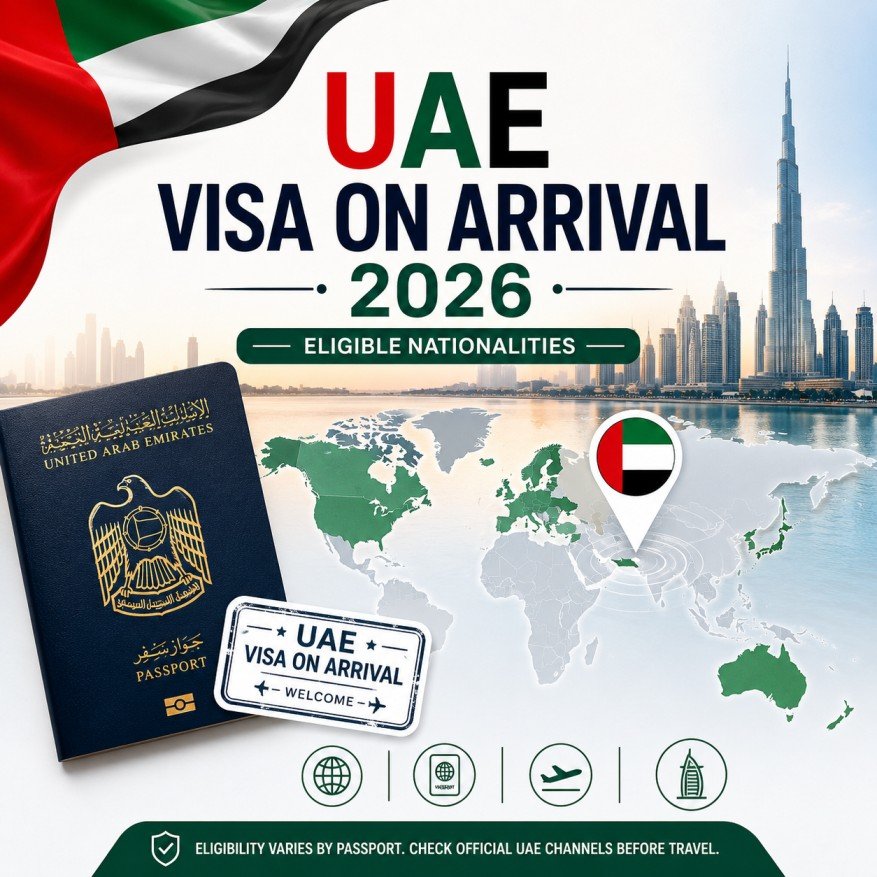
The UAE remains one of the world’s most accessible travel destinations, welcoming millions of visitors every year through its visa-on-arrival program. For eligible travelers, this means there is no need to apply for a tourist visa before departure. Instead, the visa is issued upon arrival at a UAE airport or entry point.
The visa-on-arrival system is designed to simplify travel and encourage tourism, business visits, and family travel. Visitors only need to present a valid passport and meet the entry requirements established by UAE immigration authorities.
One of the biggest advantages of visa-on-arrival eligibility is convenience. Travelers can make last-minute travel plans without waiting for visa approvals, making the UAE an attractive destination for tourists and business travelers alike.
Visa-on-arrival eligibility depends primarily on nationality. Some travelers receive a 30-day entry permit, while others qualify for a 90-day multiple-entry visit visa. The duration varies according to bilateral agreements between the UAE and individual countries.
Passport validity remains an important requirement. Visitors should generally have a passport valid for at least six months from the date of entry into the UAE. Immigration officers may also request proof of accommodation, return tickets, or evidence of sufficient funds.
Many travelers mistakenly assume all nationalities qualify for visa-on-arrival. However, citizens of numerous countries must still obtain a visa before traveling to the UAE. Checking eligibility before booking flights is strongly recommended.
The UAE government regularly updates visa policies based on international agreements and immigration regulations. Therefore, travelers should always verify the latest rules through official UAE government channels before departure.
For business travelers, visa-on-arrival provides significant flexibility by reducing administrative requirements and allowing easier access to meetings, exhibitions, conferences, and investment opportunities across the Emirates.
Families traveling to Dubai, Abu Dhabi, Sharjah, Ras Al Khaimah, Fujairah, Ajman, or Umm Al Quwain can also benefit from simplified entry procedures if they hold eligible passports.
Understanding your eligibility before travel can help avoid airport delays, denied boarding situations, and unexpected travel disruptions. The safest approach is to verify your nationality’s current visa status before every trip.
30-Day Visa On Arrival Nationalities
Citizens of the following countries generally qualify for a 30-day visa on arrival:
- Andorra
- Brunei
- Hong Kong (SAR)
- Kazakhstan
- Macau (SAR)
- Malaysia
- Mauritius
- Monaco
- Mongolia
- Republic of Ireland
- Ukraine
- Uzbekistan
- Vatican City
These travelers usually receive a 30-day visit permit upon arrival without needing prior visa arrangements.
90-Day Visa On Arrival Nationalities
Many passport holders from Europe and other partner countries qualify for a 90-day multiple-entry visit visa, including:
- Austria
- Belgium
- Bulgaria
- Croatia
- Cyprus
- Czech Republic
- Denmark
- Estonia
- Finland
- France
- Germany
- Greece
- Hungary
- Iceland
- Italy
- Latvia
- Lithuania
- Luxembourg
- Malta
- Netherlands
- Norway
- Poland
- Portugal
- Romania
- Slovakia
- Slovenia
- Spain
- Sweden
- Switzerland
- United Kingdom
Additional eligible countries include:
- Argentina
- Australia
- Bahamas
- Barbados
- Brazil
- Canada
- Chile
- China
- Japan
- Mexico
- New Zealand
- Russia
- Seychelles
- Singapore
- South Korea
- United States
Eligibility may change periodically.
Special Rules For Indian Passport Holders
Indian citizens may qualify for a visa on arrival if they hold:
- A valid US visa
- A US Green Card
- A UK residence visa
- A UK visa (where applicable)
- An EU residence permit or visa
- Eligible visas or residence permits from countries such as Canada, Australia, New Zealand, Japan, Singapore, or South Korea
The qualifying document must generally remain valid for at least six months from arrival.
Documents Required
- Passport valid for at least 6 months
- Return or onward ticket
- Hotel booking or accommodation proof
- Sufficient funds for travel expenses
- Supporting visa or residence permit (if applicable)
- tools through immigration and foreign affairs platforms.
No. GCC citizens can enter the UAE without a visa.
For many eligible nationalities, the visa is issued free of charge upon arrival. Requirements vary by nationality.
Yes. UAE immigration policies are updated periodically, so travelers should always verify the latest information before departure.
The UAE government provides official eligibility tools through immigration and foreign affairs platforms.